
Orthopedics
Fracture Displacement Patterns & Fracture Description Explained in Details
Source presentation · 2 min read
Edits save on this browser. Download a copy for your records.
Fracture Displacement Patterns
- Displaced fracture
- Fracture description
- translation
- Angulation
- Rotation
- Shortening vs lengthening
Displaced fracture
- Displaced fracture: bone fragments not in its normal anatomical position
Because of:
- The force applied to the bone
- Muscle action on the fractured fragments
- Gravity
Fracture description
- Important to learn how to describe fractures so you can communicate your findings with the other team members and with your seniors
- First you mention the shape of the fracture: transverse, spiral, oblique, comminuted, segmental
- Then you mention fracture location, you describe it according to the location on the bone (long bone: head, neck, shaft, condyle OR epiphysis, metaphysis, diaphysis)
- Examples: fracture in the distal metaphysis of the femur OR fracture in the inferior third of the shaft of the femur
- Finally you mention displacement, you describe the displacement of distal fragment in relation with the proximal fragment
- We have four patterns of displacement: translation (shift), angulation (tilt), rotation, shortening vs lengthening, depressed
- And you mention the direction of the displacement (anterior, posterior, medial, latera)
- If not displaced, you say without displacement
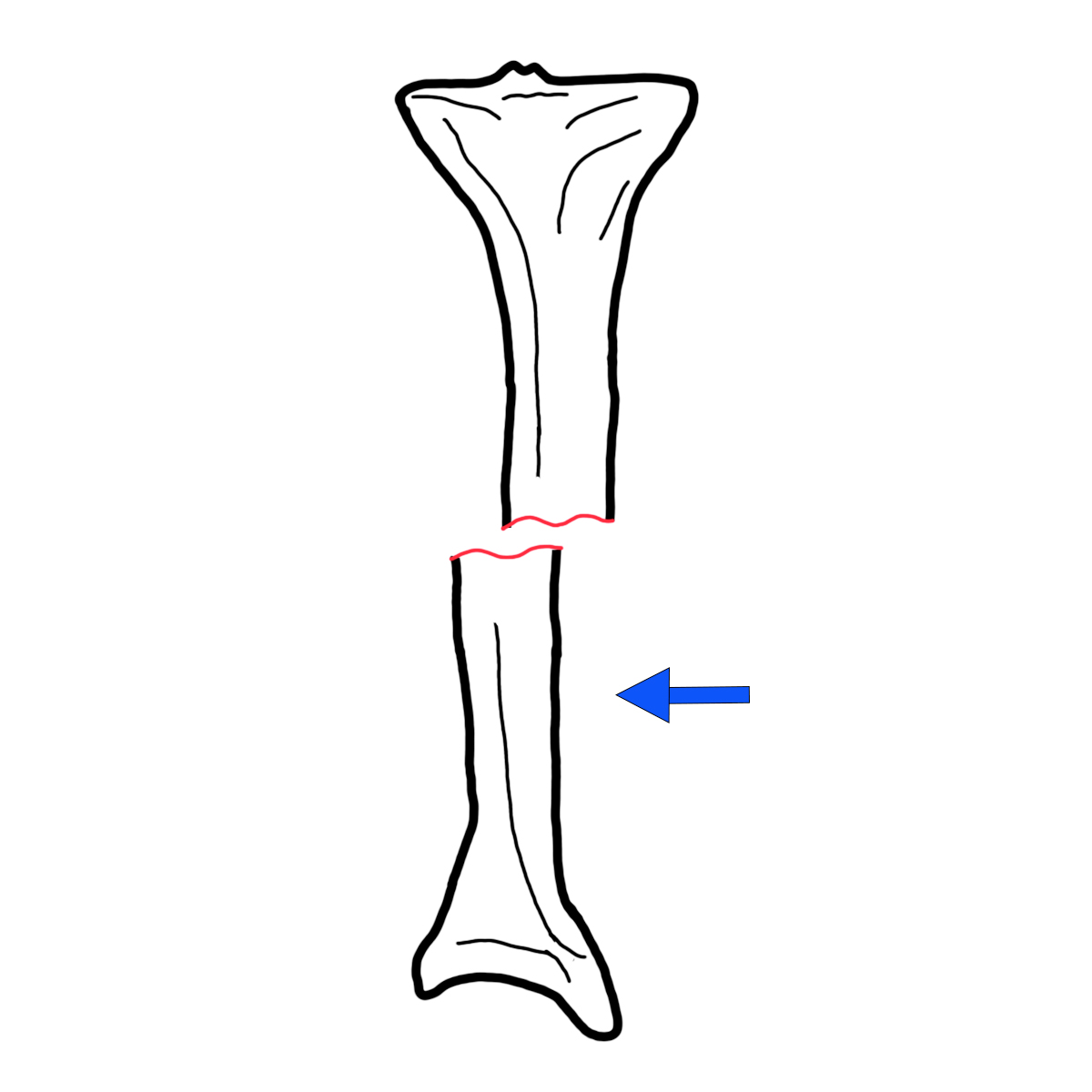
Translation (shift)
- Shift of fragments Sideways, backward or forward
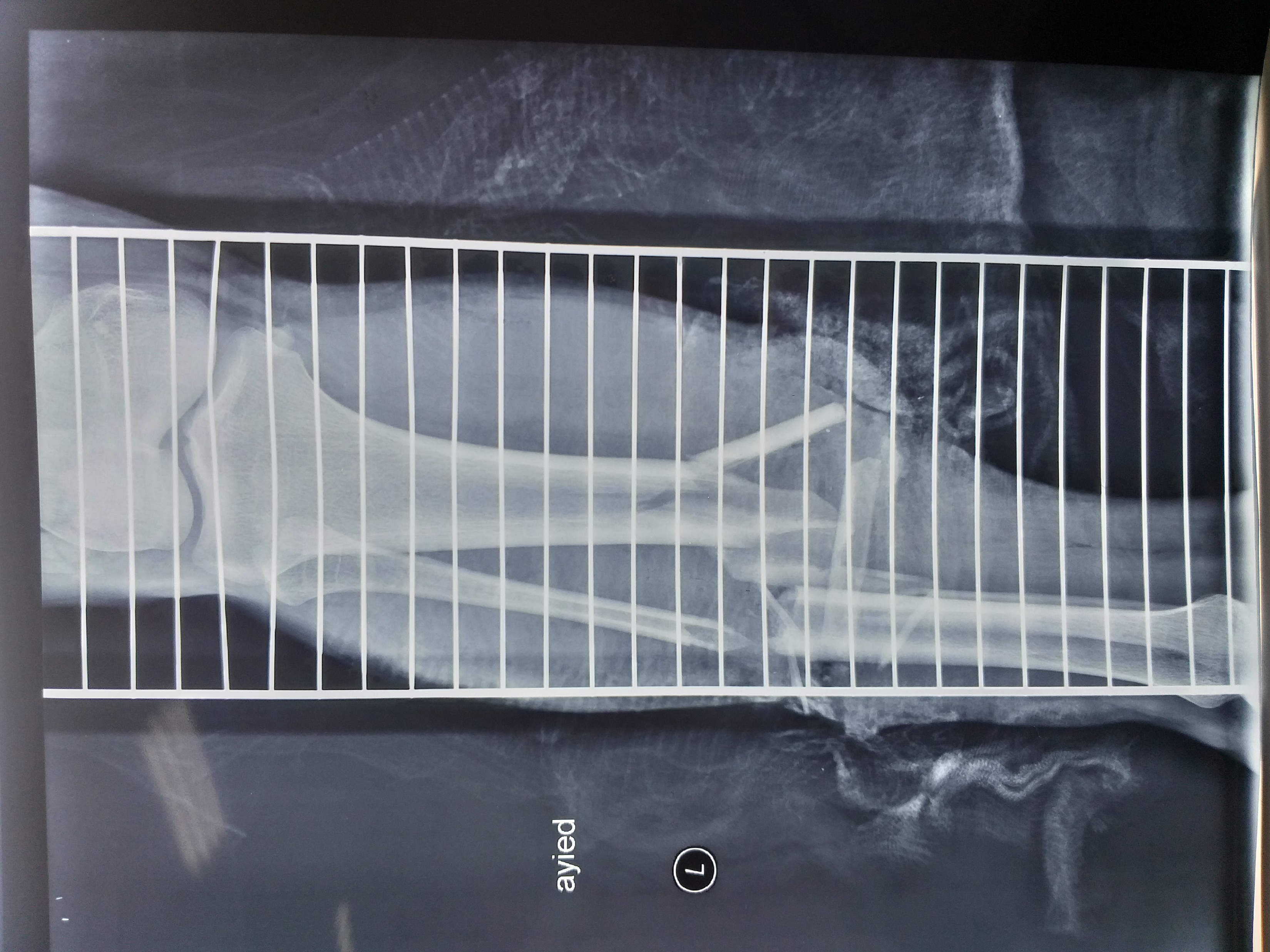
- Description of the example: transverse fracture in the mid shaft of tibia with lateral translation of the distal fragment
Angulation (tilt)
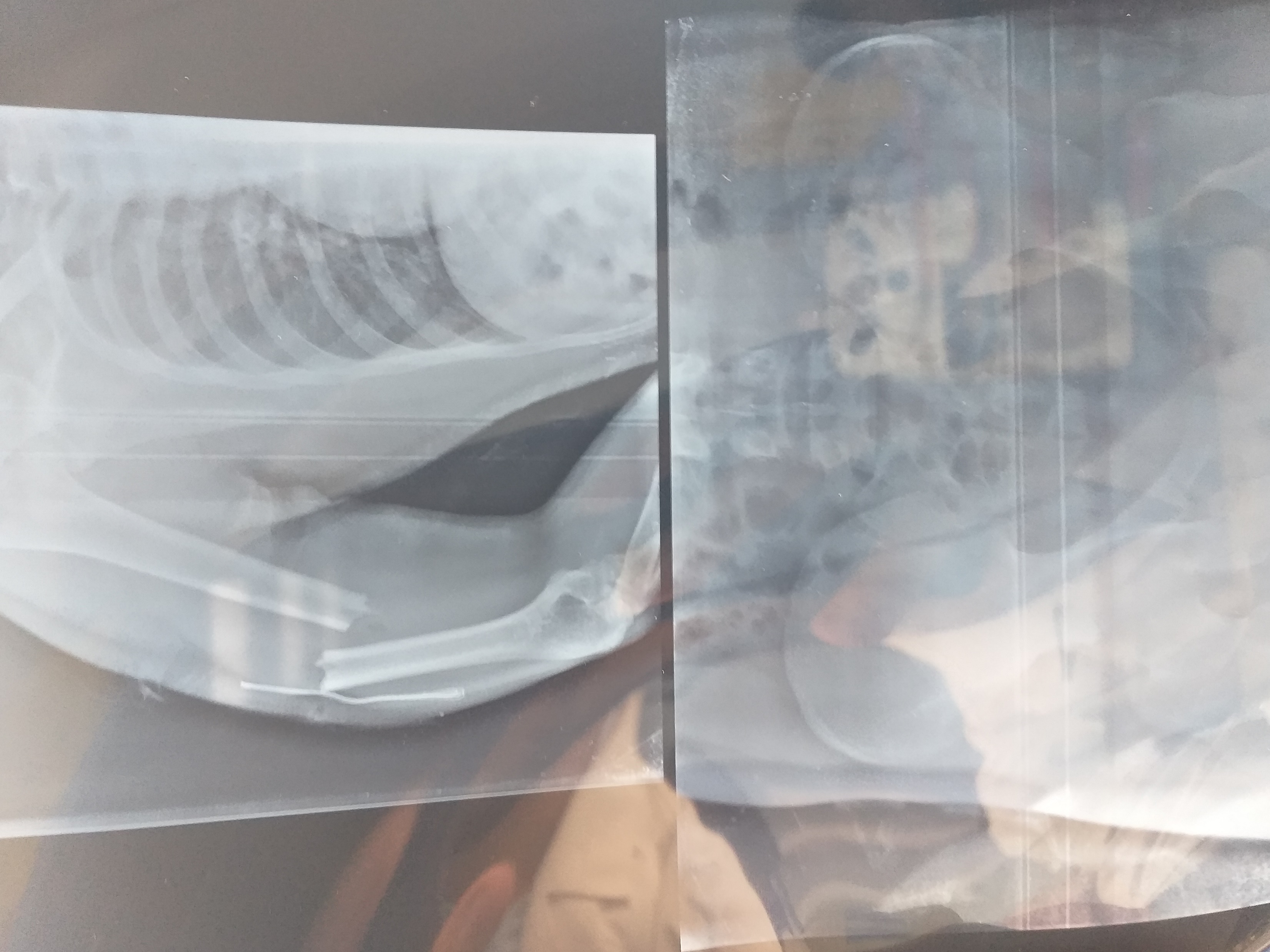
- Bone fragments would be tilted in relation to each other (angle less/more than normal)
- Description of the example: transverse midshaft tibial fracture with medial angulation of the distal fragment OR midshaft tibial fracture with the apex pointing laterally

Rotation
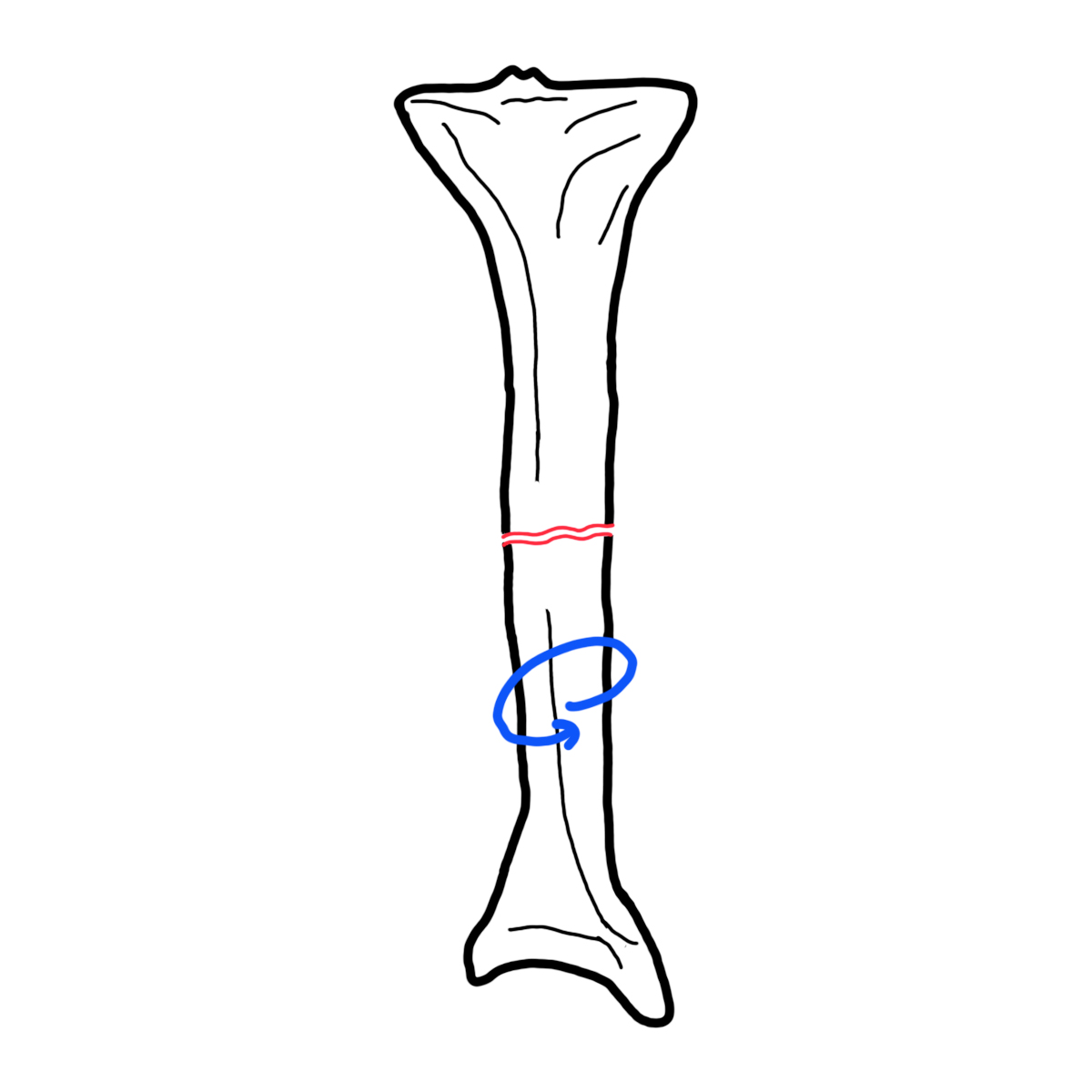
- Fragment rotated around its longitudinal axis in relation to the other fragment
- Sometimes can’t be detected on x ray so be attentive when doing physical exam
- Description: transverse midshaft tibial fracture with rotation of the distal fragment
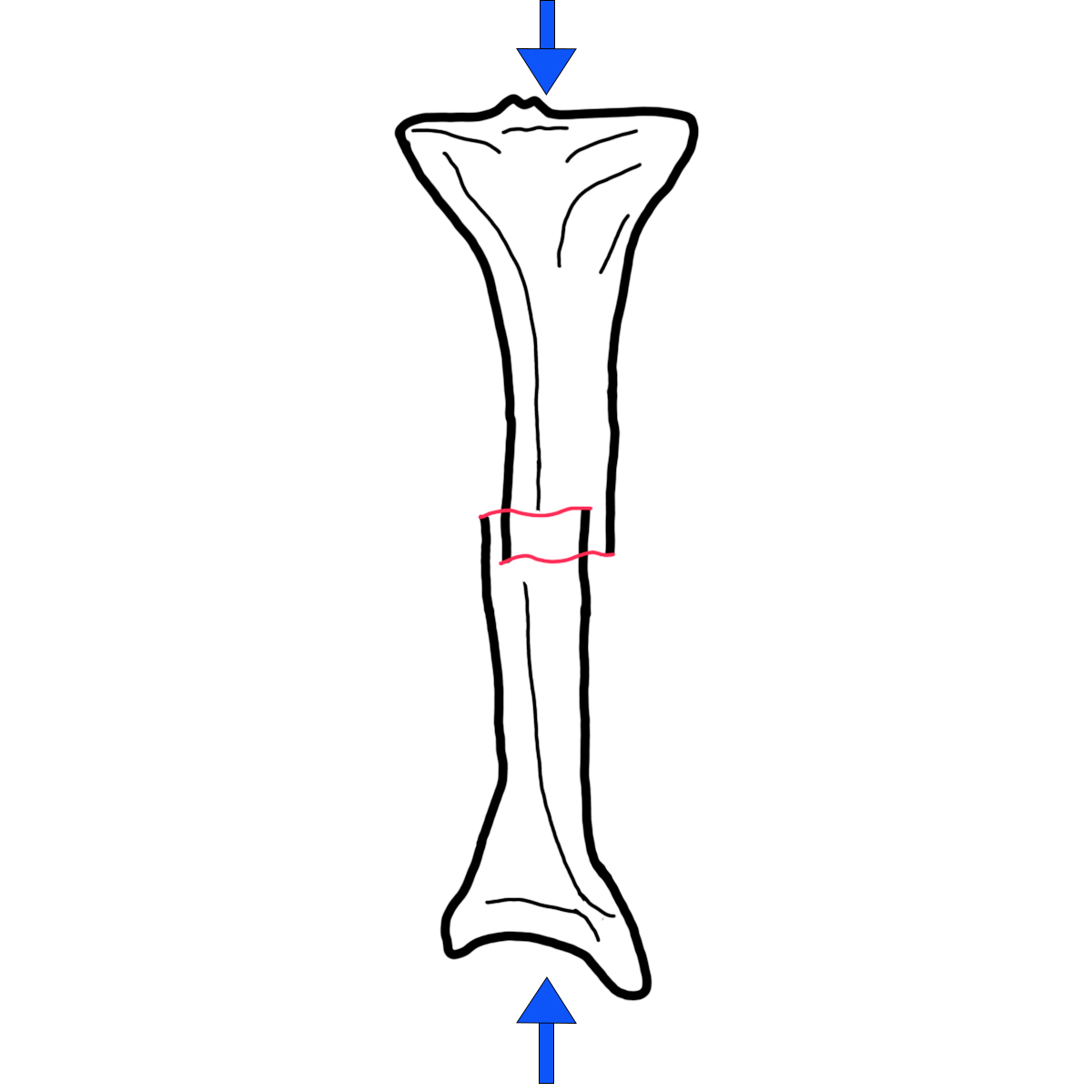
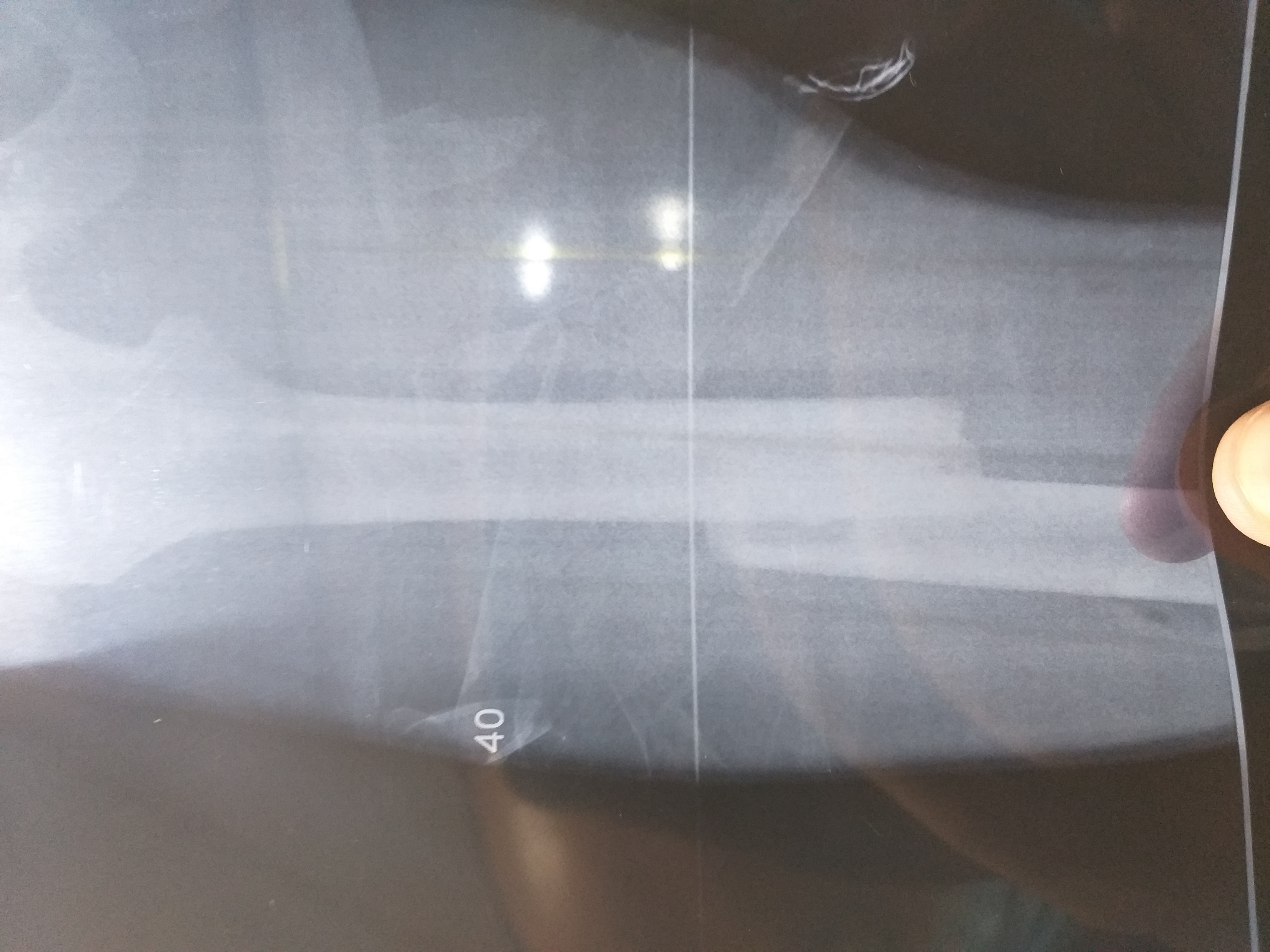
Shortening
- Overlapping of fragments due to muscle pull
- Example description: transverse midshaft tibial fracture with shortening of the bone due to overlapping of the fragments
Lengthening
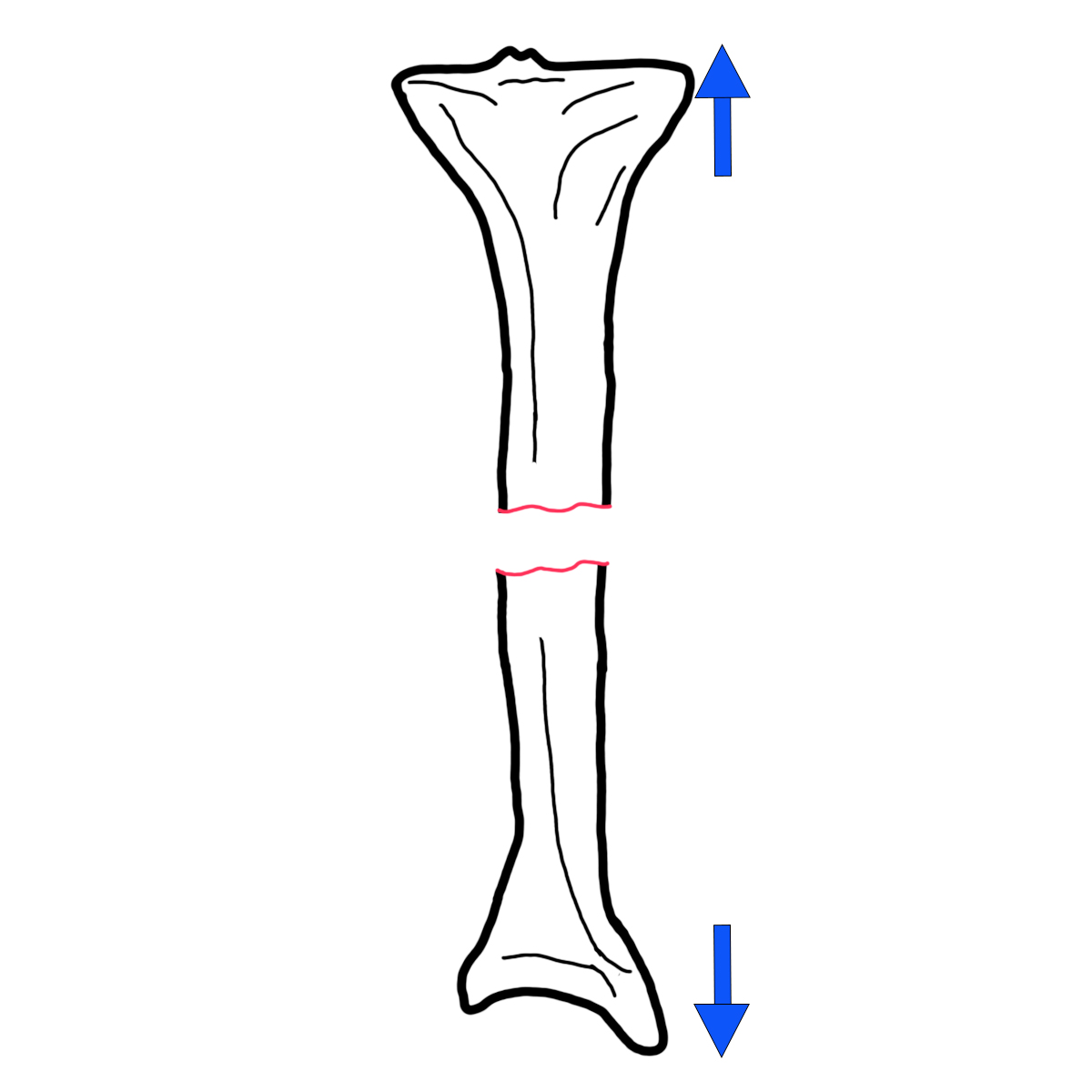
- Bone fragments get further away from each other
- Example description: transverse midshaft tibial fracture with lengthening of the bone
Continue learning
Practice the topics covered in this lecture.