
Clinical medicine
Premature Ventricular Contractions (PVCs): EKG Characteristics, Causes and Treatment
Source presentation · 3 min read
Edits save on this browser. Download a copy for your records.
PVCs
- Premature ventricular contraction (PVC) are due to impulses originating from single or multiple areas in the ventricles (same as PAC but the impulse originating in the ventricles)
- These impulses start beyond the His- Purkinje system and cause direct depolarization to the ventricles leading to wide abnormal QRS complex
- AKA ventricular ectopics, ventricular extrasystoles, ventricular premature beats, ventricular premature depolarizations
EKG characteristics
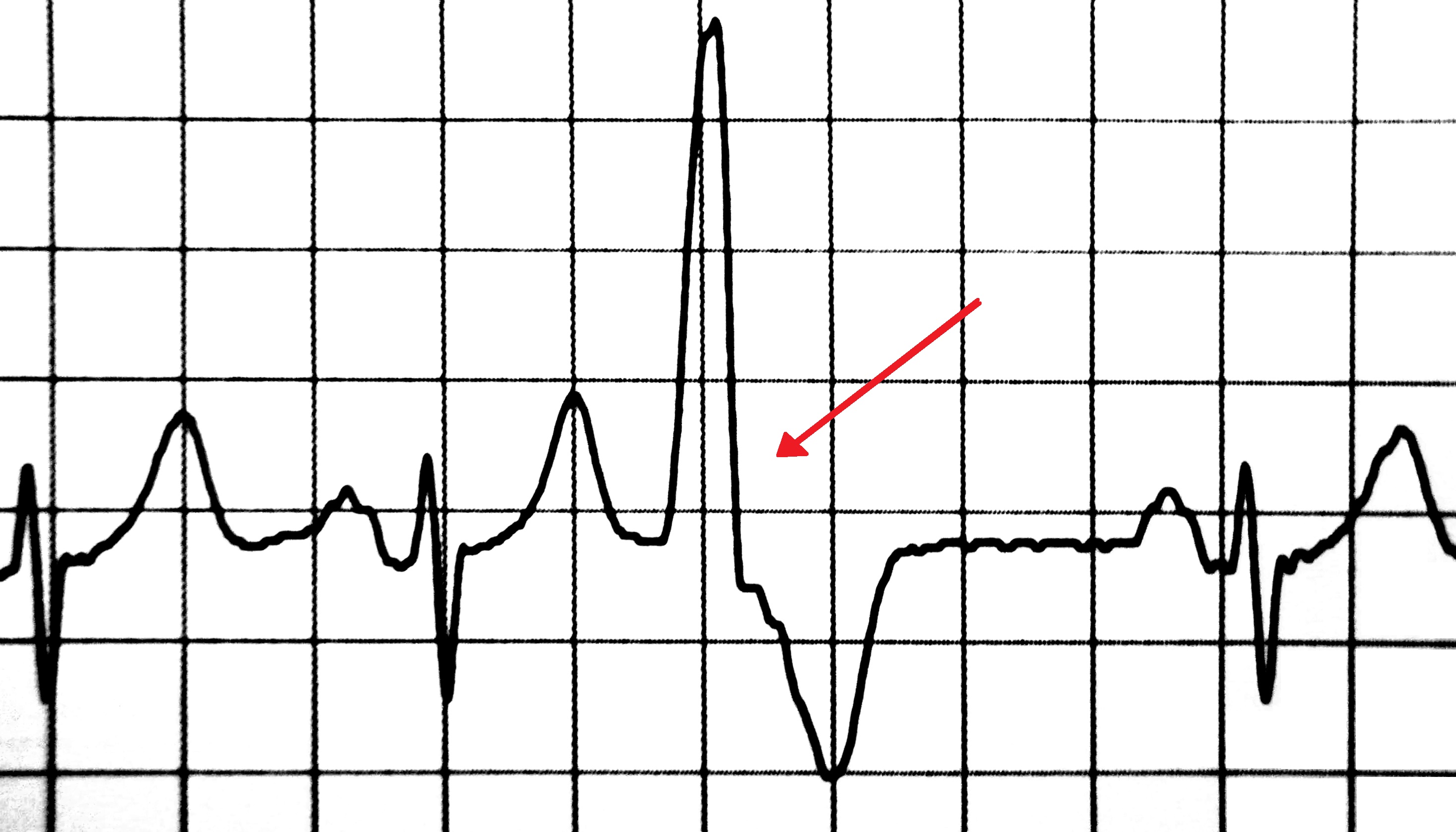
The EKG characteristics of PVCs include:
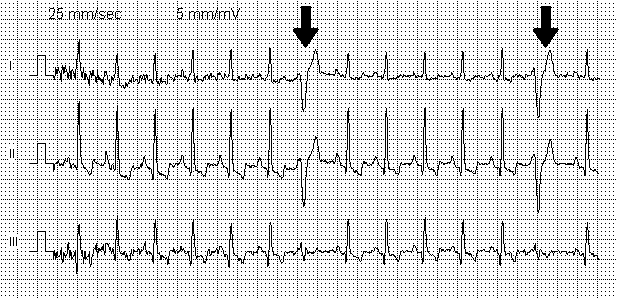
- premature and wide QRS complex
- no preceding P wave
- In most cases, the ST segment and T wave of the PVC are directed opposite the preceding major QRS deflection (Discordant)
- many PVCs are conducted into the atrial thus producing an inverted P wave
PVC
- PVCs can be unifocal or multifocal
- Unifocal: if one focus is producing all the PVCs and they all look the same on the ECG paper
- Multifocal: more than one focus is producing PVCs leading to different PVC shapes on the ECG paper
- If every other beat is a PVC then it is called bigeminy, and if every third beat is a PVC then it is trigeminy, every fourth beat is a PVC then quadrigeminy
- If two consecutive PVCs then called couplet, if three consecutive PVCs then called triplets
after the PVC comes a fully compensatory pause which means that next normal beat arrives after an interval that is equal to double the preceding RR interval
- Compensatory pause
Non sustained VT
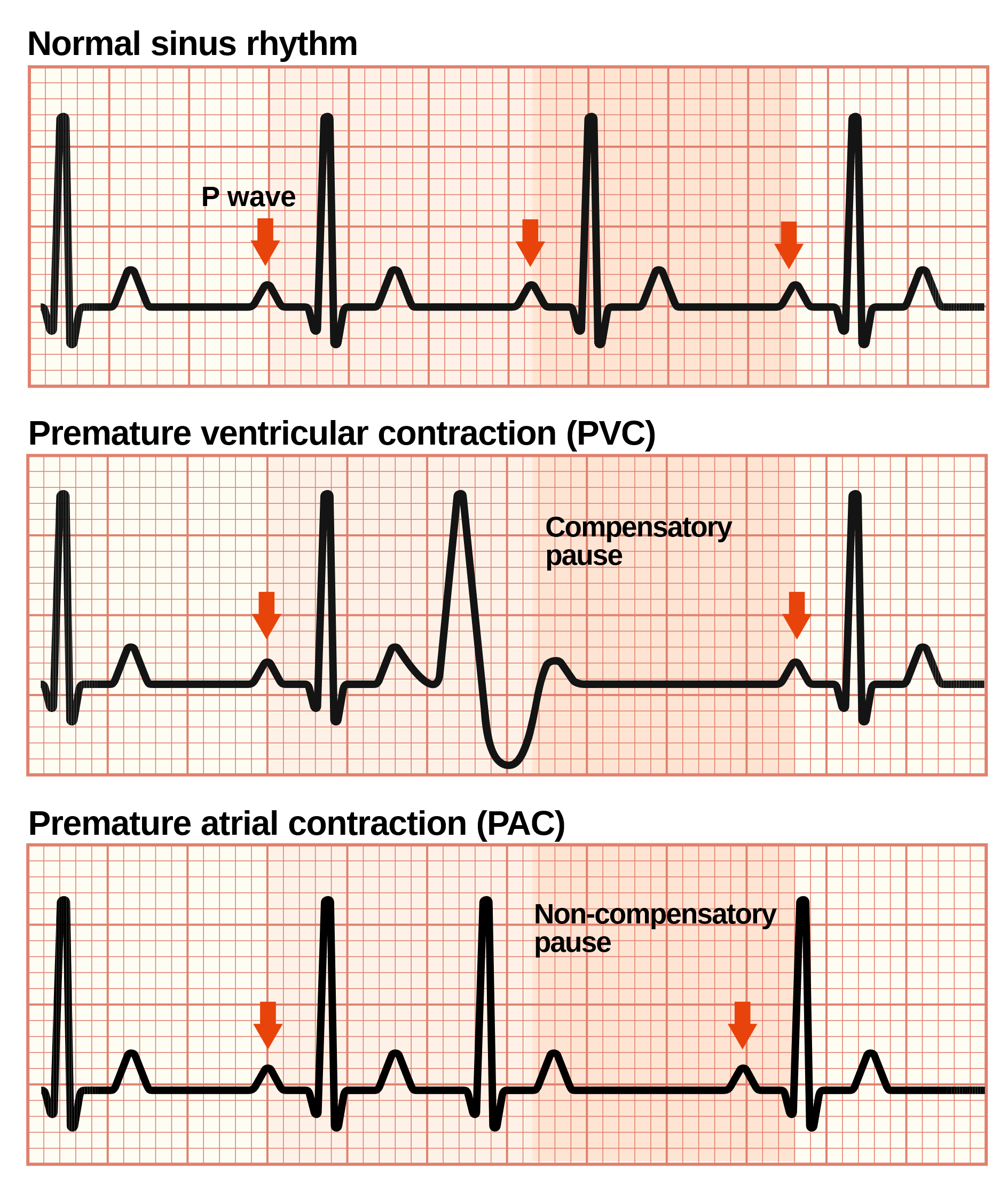
- If three or more PVCs occur in a row, patients are considered to have non sustained ventricular tachycardia
Ventricular parasystole
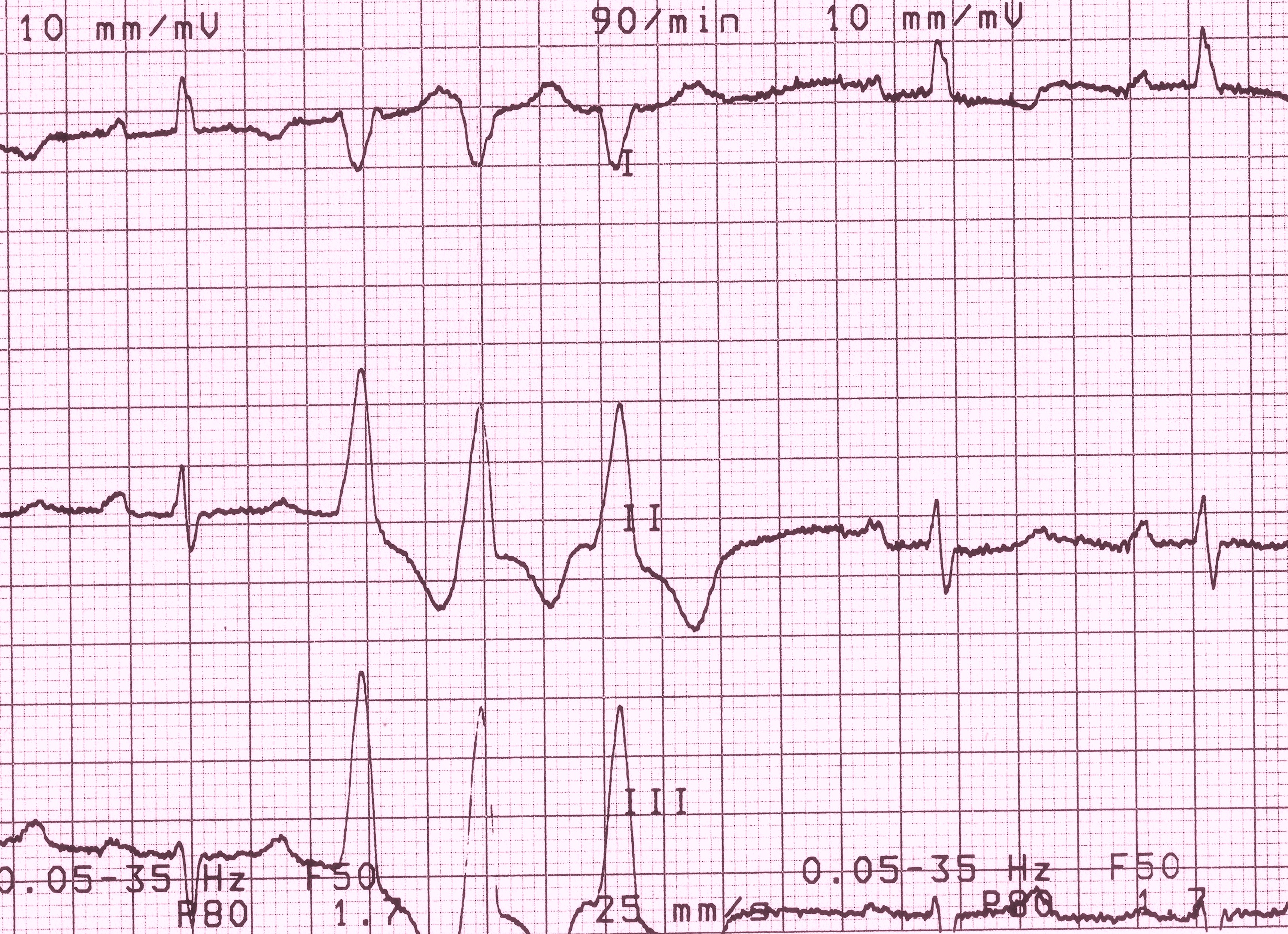
- Ventricular parasystole occurs when the ectopic ventricular focus fires frequently enough to compete with the SA node and is associated with cardiac ischemia , electrolyte imbalance and hypertensive or ischemia heart disease
Epidemiology
- PVCs are very common, occurring in most patients with IHD and acute MI
Causes
- Myocardial ischemia
- Cardiomyopathies
- Valvular disease
- Myocarditis
- Myocardial contusion
- Electrolytes imbalances: hypokalemia, hypomagnesemia and hypercalcemia
- Hypoxia and/ or hypercapnia (Respiratory failure)
- Illicit drug abuse (alcohol, amphetamines, and cocaine)
- Medications: digoxin, TCA, sympathomimetics, aminophylline and caffeine
Pathophysiology
- Causes mentioned, especially myocardial ischemia and electrolyte imbalances lead to and ectopic ventricular focus to fire spontaneously by an unclear mechanism
Presentation
- Mostly asymptomatic, but some patients my report fatigue, palpitations, lightheadedness or dizziness
Diagnosis
- ECG
- Echocardiography
- Electrolyte levels
Treatment
- Treat the underlying cause
- Symptomatic patients are treated with beta blockers (first line), CCB (nondihydropyridine) can be used if beta blockers are contraindicated, if not effective then class 1c antiarrhythmic medications (flecainide or propafane) can be used in patients with out preexisting CAD, but if patient does have CAD then amiodarone can be used
- Patient who cannot tolerate pharmacological therapy should be referred for ablation therapy
Continue learning
Practice the topics covered in this lecture.