
Pharmacology
Proton Pump Inhibitors: Mechanism of Action, Clinical Uses & Adverse Effects
Source presentation · 1 min read
Edits save on this browser. Download a copy for your records.
Mechanism of action
- PPIs are prodrugs with enteric coating
- They get absorbed in the intestine to blood
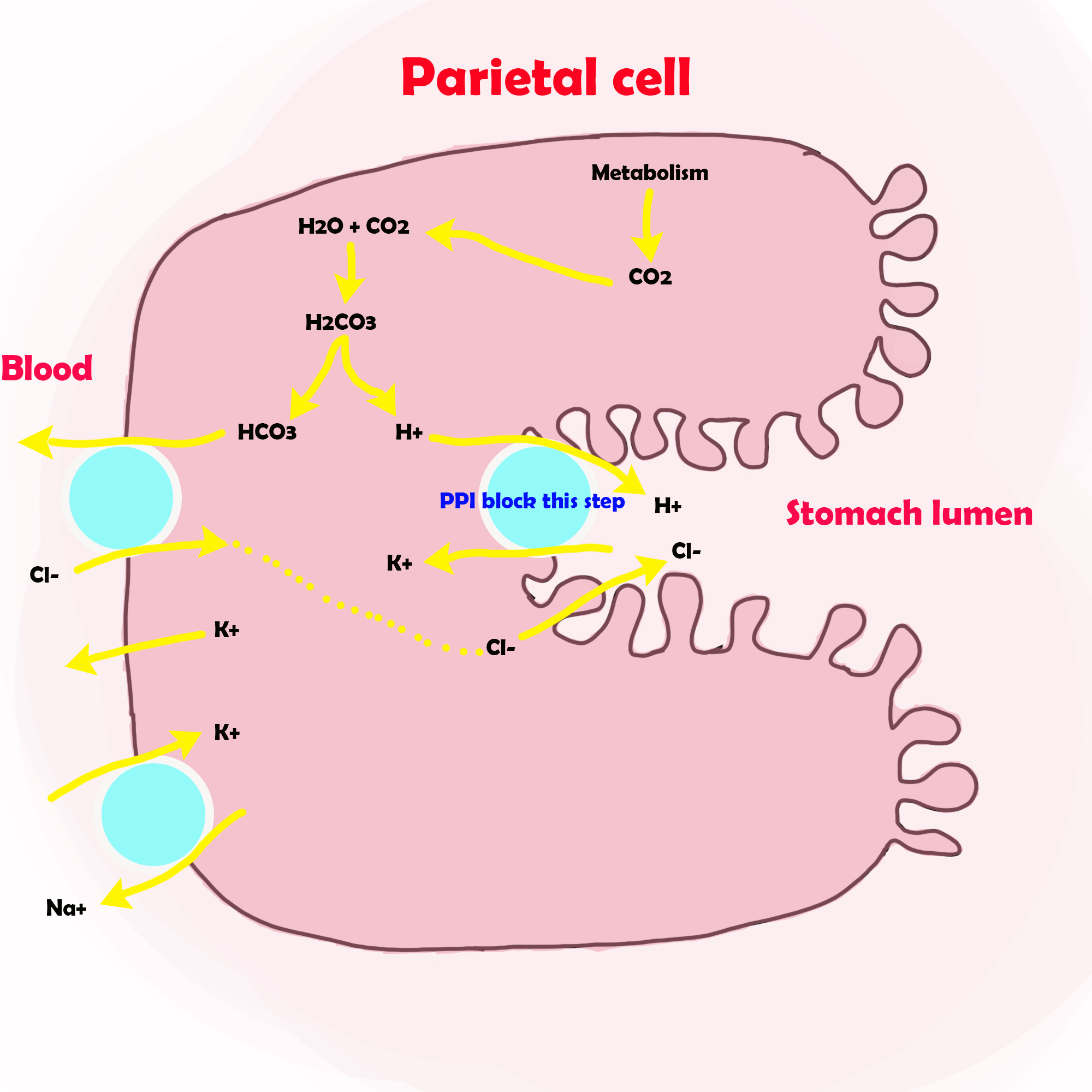
- PPIs work on the parietal cells in the stomach
- PPIs irreversibly inhibit gastric hydrogen potassium ATPase (H+/K+) ATPase Which is the final step of acid secretion in the stomach
- that is why PPIs are the most effective at inhibiting gastric acid
- PPIs have short half lives (around 1.5 hours) but acid inhibition lasts up to 24 hours because of irreversible inactivation of the proton pumps
Presentation section
6 PPI agents
- Omeprazole
- Esomeprazole
- Lansoprazole
- Dexlansoprazole
- Rabeprazole
- Pantoprazole
PPIs clinical uses
- GERD, erosive esophagitis
- Peptic ulcer disease
- H pylori infection
- NSAID-associated ulcers
- GIT bleeding due to ulcer
- Non ulcer dyspepsia
- Gastrinoma and hypersecretory conditions
Adverse effects
- Nausea, Diarrhea, Headache, GI disturbance
- Decrease effectiveness of some drugs like clopidogrel when used with omeprazole and esomeprazole. Because they inhibit CYP2C19 which is involved in converting clopidogrel to its active metabolites
- Increase risk of fractures
- Decrease vitamin B12 absorption
- Increase gastric cancer risk
Continue learning
Practice the topics covered in this lecture.