
Orthopedics
Fracture Healing Outcomes: Union, Delayed Union, Non Union, Malunion, Refracturing All Explained
Source presentation · 2 min read
Edits save on this browser. Download a copy for your records.
Union
- Complete healing of the fracture
- Physical examination: Fracture site is painless on palpation and weight bearing
- X rays shows bridging callus, the fracture line is replaced by bone
Delayed union
- Fracture healing takes twice as long as the expected time for a specific location
- Physical examination: the fracture site has local swelling and movement or partial weight bearing is painful
Non union
- Bone fails to unite
- Fracture healing doesn’t occur in less than 9 months since initial injury and no signs of healing in the final three months
- Causes of non union
- Mechanical instability
- Impaired vascularity
- Infection
- Common sites: scaphoid bone, femoral neck, tibial shaft
- History of pain
- Examination: tenderness over the fracture site
- X ray: persistent fracture line seen
Types of non union
- Hypertrophic: abundant callus formation but there is radiolucent line at the non union line on x ray
- Oligotrophic: little or no callus formation, radiolucent line on x ray too
- Atrophic: no callus formation, osteopenia, sclerotic avascular bone segments
- Infected: osteopenia, sclerotic avascular bone segments, segmental bone loss, clinical signs of infection
- Synovial pseudoarthrosis (false joint) also could be (hypertrophic, oligotrophic, atrophic, infected)
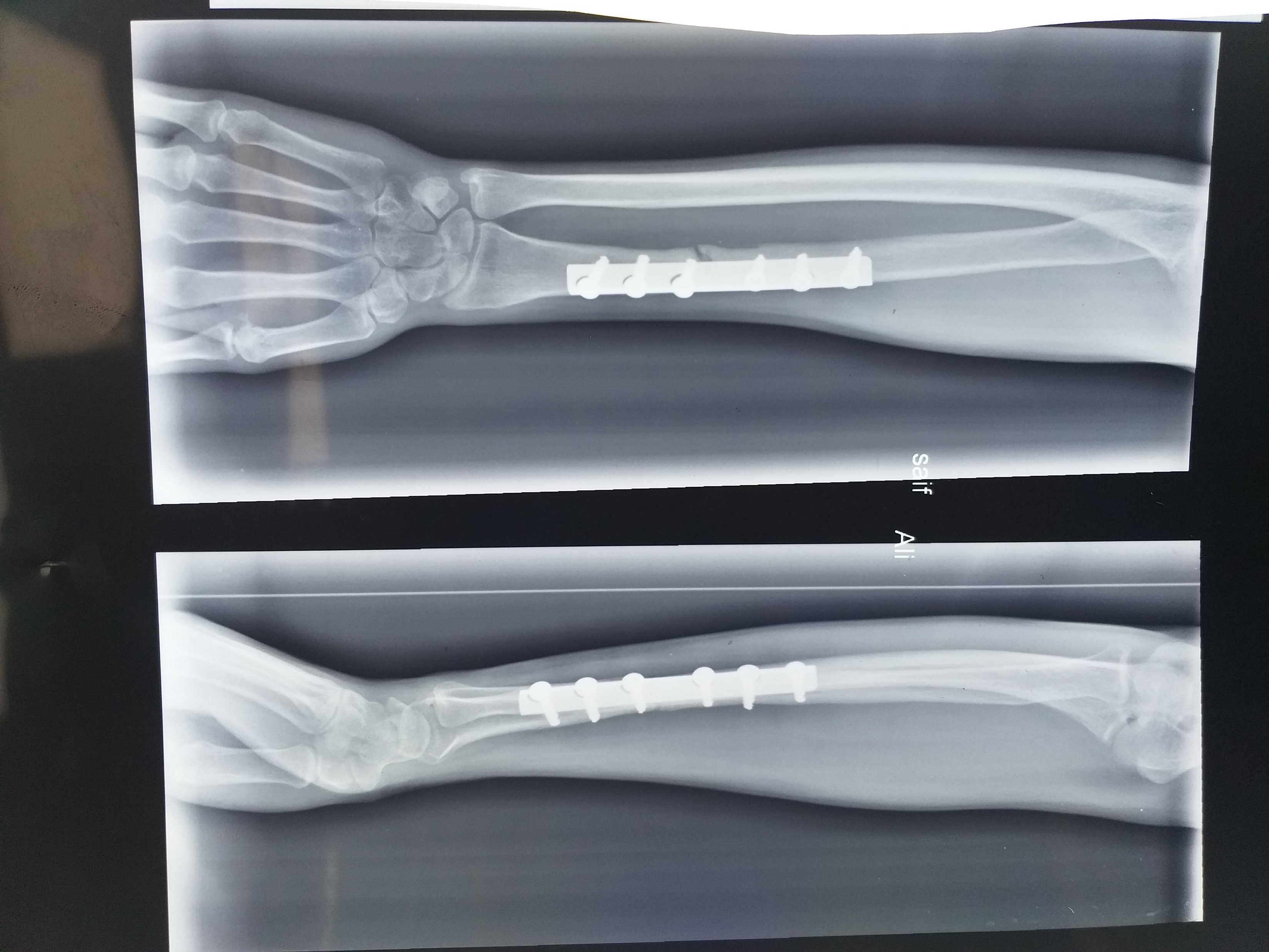
Non union risk factors
- Old age
- Poor nutrition
- Drugs
- Metabolic disease
Malunion
- Healing in non anatomical position
- Partially compensated for by the remodeling of the bone
- May lead to functional impairment or poor aesthetic
Causes:
- Inaccurate reduction
- Inadequate immobilization
- Complications: osteoarthritis if there is intra articular malunion or joint instability
Refracturing
- Fixation materials should be removed within 18 months after fracture healing
- If left in place for longer than that leads to cortical atrophy and high risk of refracturing

Continue learning
Practice the topics covered in this lecture.