
Orthopedics
Schatzker Classification of Tibial Plateau Fractures
Source presentation · 3 min read
Edits save on this browser. Download a copy for your records.
Definition
- 6 grades classification system for tibial plateau fractures
- It combines fracture location, pattern, fracture energy and tibial plateau involved if it is lateral or medial or both to produce this system
- Low energy vs high energy
- Grade (I- III) low energy
- Grade (IV- VI) high energy
- Unicondylar vs bicondylar
- Grade (I- IV) unicondylar
- Grade (V and VI) bicondylar
Classification
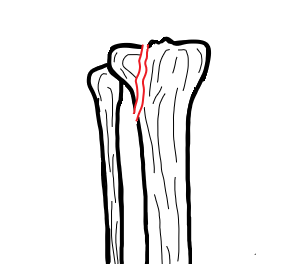
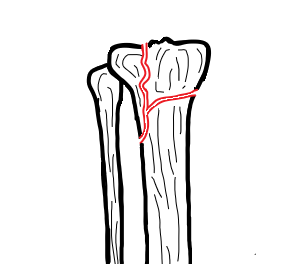
- Grade I: split fracture of the lateral tibial plateau
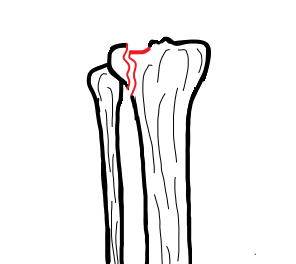
- Grade II: split- depression fracture of the lateral tibial plateau
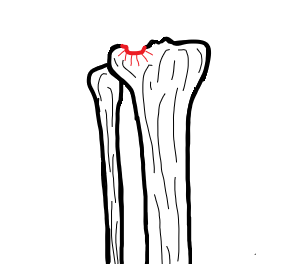
- Grade III: depression fracture of the lateral tibial plateau
- Grade III A: lateral depression
- Grade III B: central depression
- Grade IV: split or depression fracture of the medial tibial plateau
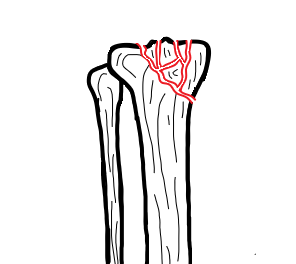
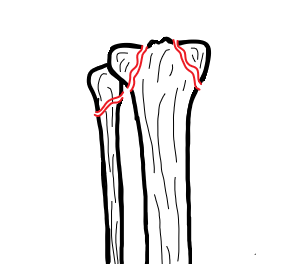
- Grade V: wedge shape pattern fracture involving both tibial plateaus
- Grade VI: dissociation of the articular surface from the diaphysis + any other fracture
Grade 1
- Vertical split of the lateral condyle of the tibia in the sagittal plane
- Most common in young people who have hard cancellous trabeculae and good bone density so the bone splits and doesn’t depress
Presentation section
Grade 2
- Split- depression fracture of the lateral tibial plateau
- Most common grade
- Associated with either greater energy than a Grade I or with poor bone quality
- The lateral tibial plateau can’t stand the load of the lateral femoral condyle and that is why it sustains split- depression fracture
Grade 3
- Depression fracture of the lateral tibial plateau and it’s classified into two types: Grade III A with lateral depression while Grade III B with central depression of the lateral tibial plateau
- Associated with poor bone quality and can be caused by very low energy mechanisms.
- Most common in elderly
- Joint stability is rarely affected but axial instability might occur with Grade III B
Grade 4
- Split or split- depression fracture in the medial plateau. The fracture pass lateral to the intercondylar eminence and goes back medially to separate the medial plateau from the tibia
- Mechanism of injury: high energy Varus force with axial loading
- Knee joint stability is extensively affected and they represent variant of knee dislocation
- High risk for compartment syndrome and neurovascular injury
Grade 5
- Split or split- depression fracture involving both tibial plateaus. Intercondylar eminence is spared because of the cruciate ligament holding it
- Total articular injury
- Mechanism of injury is high energy force
- unstable knee joint but it is more stable than Grade IV
Grade 6
- dissociation of the articular surface from the diaphysis + any other fracture
- Mechanism of injury: high energy force, open fracture with extensive soft tissue injury and compartment syndrome is common with this grade
- Unstable knee joint
- High risk for compartment syndrome and neurovascular injury
Continue learning
Practice the topics covered in this lecture.