
Clinical medicine
Bedside Assessment of The Airway in Resuscitation
Source presentation · 6 min read
Edits save on this browser. Download a copy for your records.
Bedside assessment of the airway
- Bedside assessment of the airway is done to decide if patient need airway management or not
- In bedside assessment of the airway => we follow the Steps of Look, listen and feel
- Same steps are applied in the breathing and circulation assessment and they all done at the same time but here we will focus on the airway only
Consciousness
- Brain is responsible of keeping the consciousness and the brain does have other functions including keeping the pharyngeal muscle tone which keeps the airway open
- If patient consciousness is impaired (coma or AMS) then the other brain functions might be also impaired (such as pharyngeal muscle tone) and this means that the airway is compromised and requires management
- General guidelines suggest that at GCS of 8 or lower, airway management with a definitive airway is required
Pharyngeal muscle tone
- one of the important muscles in keeping the airway open is the pharyngeal muscles
- when we lie supine, gravity pulls down the tongue posteriorly but the pharyngeal muscles tone keep the tongue up and prevent tongue prolapse
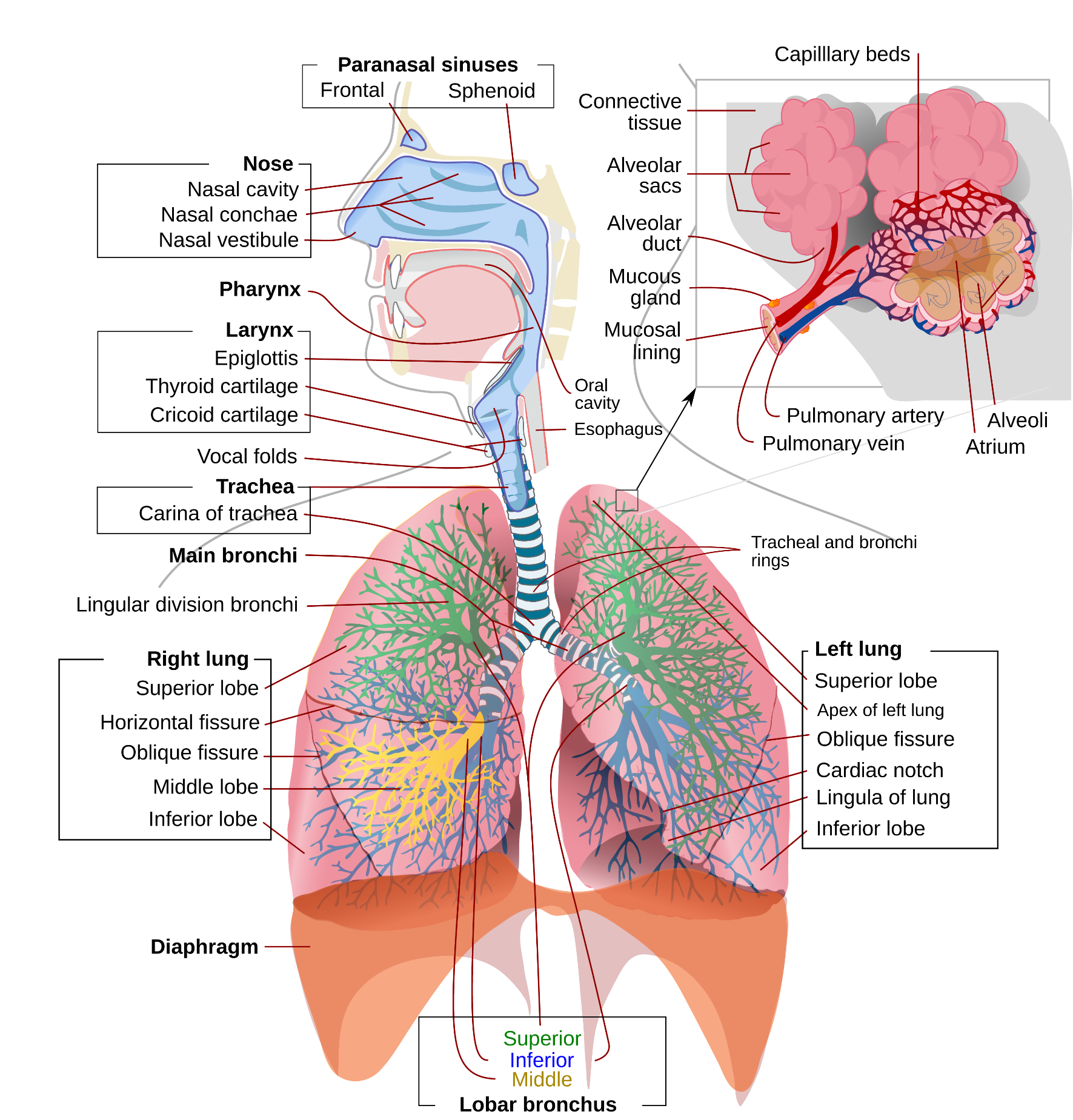
- One of the brain functions is to keep the pharyngeal muscle tone active, some brain neurons always firing to keep these muscles active
- When there is a pathology that causes disturbance in brain function and patient become unconscious, other brain function maybe also get affected including the muscle tone leading to loss of tone and posterior tongue prolapse and blocked airway
Glasgow Coma Scale
| Score | Eye opening | Verbal response | Motor response |
|---|---|---|---|
| 1 | None | None | None |
| 2 | Open to pain | Incomprehensible sounds (like moaning) | Extensor posturing |
| 3 | Open to voice | Inappropriate words (random) | Flexor posturing |
| 4 | Open spontaneously | Confused or disoriented | Withdrawal in response to pain |
| 5 | Oriented | Localize pain | |
| 6 | Follows commands |
Conscioussness
- Also airway reflexes such as the cough reflex and swallow reflex are most likely impaired when GCS is 8 or below
- So if the patient GCS is 8 or below, this patient requires airway management
- if patient has altered mental status such as agitation or somnolescence (drowsy), this might be caused by hypoxemia which might be caused by airway obstruction so always look for that
- CO2 retention is also might be caused by airway obstruction in rare cases, because it is mostly caused by breathing problems
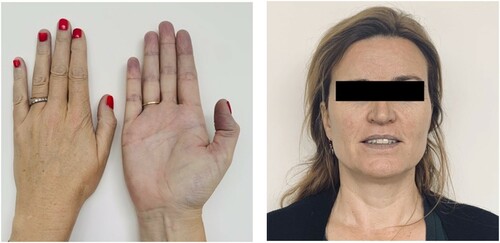
Color of the patient
- if patient color is blue (cyanosis), this is due to increased deoxygenated hemoglobin above 5 g/dl (for the average HB of 15 g/dl), this is also termed severe hypoxemia when O2 saturation is in the 60s
- This could be due to airway obstruction so look for that
Mouth
- In looking at the mouth, you look for secretions coming out (drooling)
- Drooling could be due to airway related problem especially in pediatrics, that is because to swallow secretions, there has to be a period where glottis closes (respiration stops) to allow secretions to cross, but if the child is dyspnic, they can't stop breathing so they let secretions out and focus on breathing, (e.g. epiglottitis)
- When there is increased secretions such as in organophosphorus poisoning , this may lead to aspiration of secretions and pneumonia because there is a certain limit to amount of secretions that can be swallowed, if secretions exceeded that limit, aspiration occurs
- If the patient is unconscious then you also look inside the mouth if there is foreign body or if there is secretions, (secretions inside the mouth indicate swallow reflex is lost and patient need airway management)
- Foreign bodies like fractured teeth or blood clots should be removed and all secretions should be suctioned out of unconscious patient mouth
- You also look at the face, if there is severe fascial trauma this means patient might need airway management
Neck
- In trauma cases, Look for expanding mass (hematoma), this might compress the airway and lead to obstruction
- Also look if patient is using accessory muscles such as scalenus or sternocleidomastoid , this means labored breathing ,
Chest
- You also look at the chest if there is recessions , this also indicates labored breathing
- Labored breathing is mostly due to breathing problem but it could be due to airway problem too
- Also look at the chest if it is moving or not and calculate the respiratory rate
- look at the pattern of breathing
- in complete airway obstruction , look for paradoxical breathing (diaphragm and ribs move in opposite directions during inspiration and expiration)
Listen
- List for
- Abnormal upper airway breath sounds: Stridor, Gurgling and Snoring
- Speech
- Stridor: it is mainly an inspiratory sound but could be inspiratory-expiratory, for stridor to develop, trachea has to be blocked by 90 % or more (severe obstruction) => airway management is necessary
- Gurgling: this is due to air passing through secretions, and normally secretions have to be swallowed so if gurgling is heard then secretions are not being swallowed (swallow reflex lost) and airway have to be managed
- Snoring: it is made due to loss of the muscle tone in the soft palate leading to redundant soft palate which blocks the airway when the patient is supine, so for the air to pass, it has to push the redundant soft palate and flow leading to the snoring sound => this requires putting the patient in left lateral position and airway management is required
- Noisy breathing: it is a mix between snoring and gurgling and this definitely requires airway management
- Also, listen to patient’s speech, if patient can speak this means that it is unlikely problem in the airway; if patient can't complete a sentence and tachypneic then this is mostly a breathing problem but could be due to airway
- if patient has muffled sound after trauma to larynx , then this patient has a direct laryngeal trauma and may need airway management
- Hot potato speech: This maybe due to airway problem In peritonsillar abscess (quinsy) which has to be drained , it also might be due to bulbar and pseudobulbar palsy but that is not related to the airway
Feel
- Feel the larynx, if it is clicking When pressed on, this means it is fractured, in this case airway may get obstructed so airway management might be needed
- Feel the neck, if there is crackling sensation felt, same as when you press on wet sponge, this is due to surgical emphysema , mostly coming from pleura when there is lung injury or it could be coming from the airway if there is airway injury, this has to be excluded
- Surgical emphysema is not life threatening because it will spread to all body subcutaneous tissue because there is no septa between subcutaneous tissue; but airway injury or lung injury has to be looked for and treated
Resources
- Dr. Nasrat Al-Attar emergency medicine teaching videos
- Tintinalli’s emergency medicine
- Wikipedia
- Statpearls
Continue learning
Practice the topics covered in this lecture.