
Clinical medicine
H. Pylori Treatment: All Treatment Regimens Explained
Source presentation · 4 min read
Edits save on this browser. Download a copy for your records.
In This Video
- H. Pylori Treatment
- Treatment regimens and dosing
- How to choose a treatment regimen
- What to do if treatment regimen fails
- Who should receive H. pylori treatment
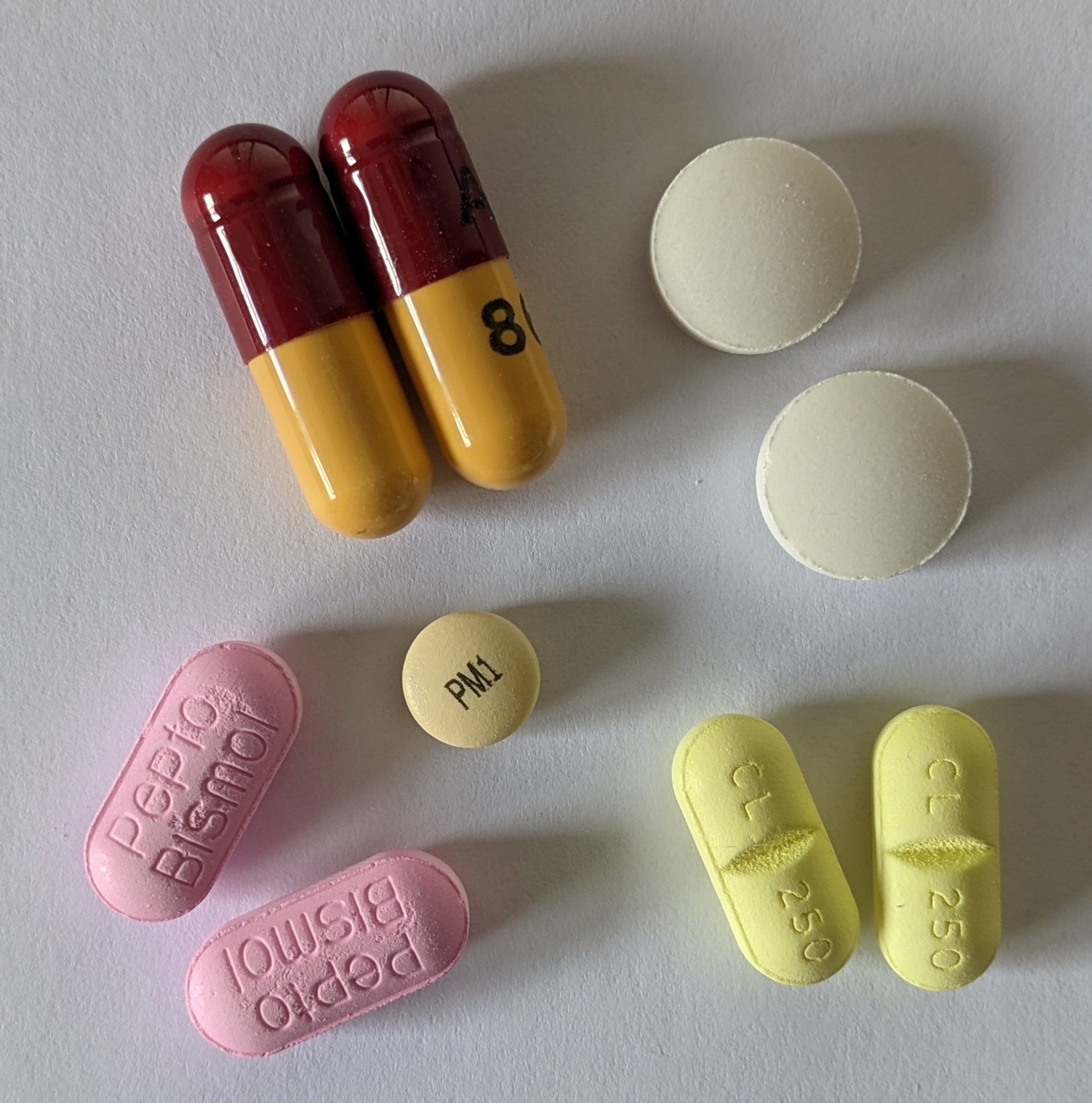
Treatment Regimens
According to the American college of gastroenterology (ACG), we have multiple treatment regimens for H. pylori infection that will be explained in the next slides:
- Clarithromycin triple therapy
- Bismuth quadruple therapy
- Concomitant therapy
- Sequential therapy
- Hybrid therapy
- Levofloxacin triple therapy
- Fluoroquinolone sequential therapy
- Rifabutin triple therapy
Clarithromycin Triple Therapy
This is a 14 day regiment and it consist of:
- PPI: standard or double the standard dose BID
- Clarithromycin: 500 mg BID
- Amoxicillin 1g BID or metronidazole 500 mg TID
- This is the treatment of choice if the strain is susceptible to clarithromycin and metronidazole; and the patient should have no previous history of macrolide exposure for any reason
PPI standard dose
| PPI | Standard dose |
|---|---|
| Omeprazole | 20 mg |
| Esomeprazole | 20 mg |
| Lansoprazole | 30 mg |
| Rabeprazole | 20 mg |
Bismuth Quadruple therapy
This is a 10- 14 day regiment and it consist of:
- PPI: standard dose BID
- Bismuth Subsalicylate: 300 mg BID
- Amoxicillin (in children < 8) 1 g BID or tetracycline (in children > 8 and adults) 500 mg QID
- Nitroimidazole (metronidazole or tinidazole) 500mg BID
- bismuth quadruple therapy is used when resistance to both clarithromycin or metronidazole is not known; and it is used in patients with any previous macrolide exposure or who are allergic to penicillin (older than 8)
Concomitant therapy
This is a 10- 14 day regiment and it consist of:
- PPI: standard dose BID
- Clarithromycin: 500 mg BID
- Amoxicillin: 1 g BID
- Nitroimidazole: 500 mg BID
Sequential therapy
This is a 10- 14 day regiment and it consist of:
- PPI (standard dose BID) with amoxicillin (1 g BID) for 5-7 days followed by PPI with nitroimidazole 500 mg BID and clarithromycin 500 mg BID for 5-7 days
- Sequential therapy should not be given if the strain is resistant to metronidazole or clarithromycin
Hybrid therapy
This is a 10- 14 day regiment and it consist of:
- PPI (standard dose BID) and amoxicillin 1g BID for 7 days followed by a PPI, amoxicillin, clarithromycin 500mg BID and a nitroimidazole 500mg BID for 7 days
Levofloxacin triple therapy
This is a 10- 14 day regiment and it consist of:
- PPI: standard dose BID
- Levofloxacin: 500 mg QD
- Amoxicillin : 1 g BID
Fluoroquinolone sequential therapy
This is a 10- 14 day regiment and it consist of:
- PPI standard or double the standard BID and amoxicillin 1 g BID for 5-7 days followed by PPI, fluoroquinolone 500 mg QD and nitroimidazole 500mg BID for 5-7 days
Rifabutin triple therapy
This is a 10 day regiment suggested as a salvage treatment if first line treatment fails and it consist of:
- PPI: standard dose BID
- Amoxicillin: 1 g BID
- Rifabutin: 300 mg QD
LOAD regimen
- Levofloxacin: 350 mg QD
- PPI: double standard dose
- Nitazoxanide: 500 mg BID
- Doxycycline: 100 mg QD
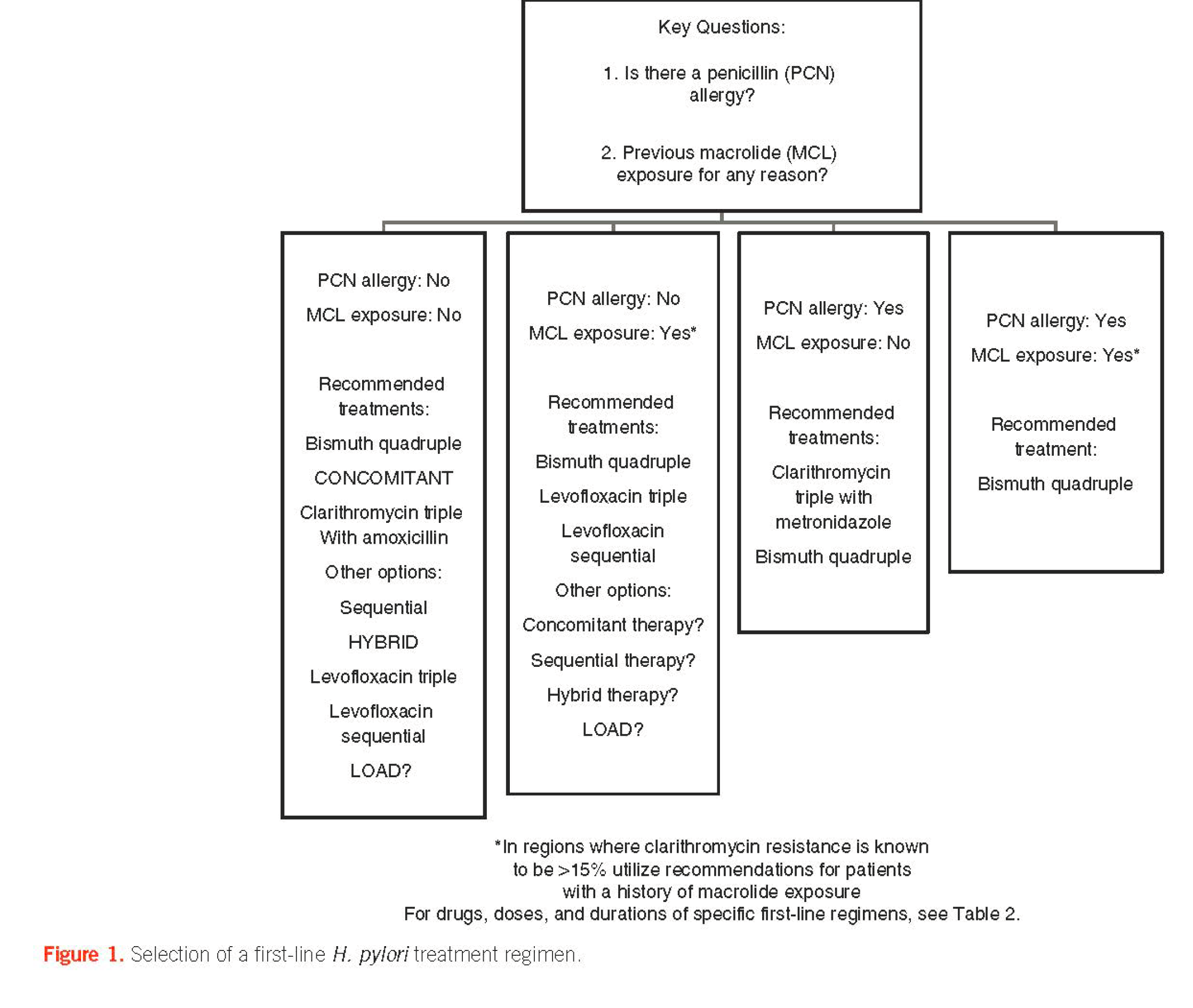
Choosing a first line regimen
- Choosing a regimen depends on patient previous antibiotic exposures and if patient has penicillin allergy or no
- The best regiment for a specific patient is the regiment that the patient had minimal exposure to its antibiotics
If treatment fails
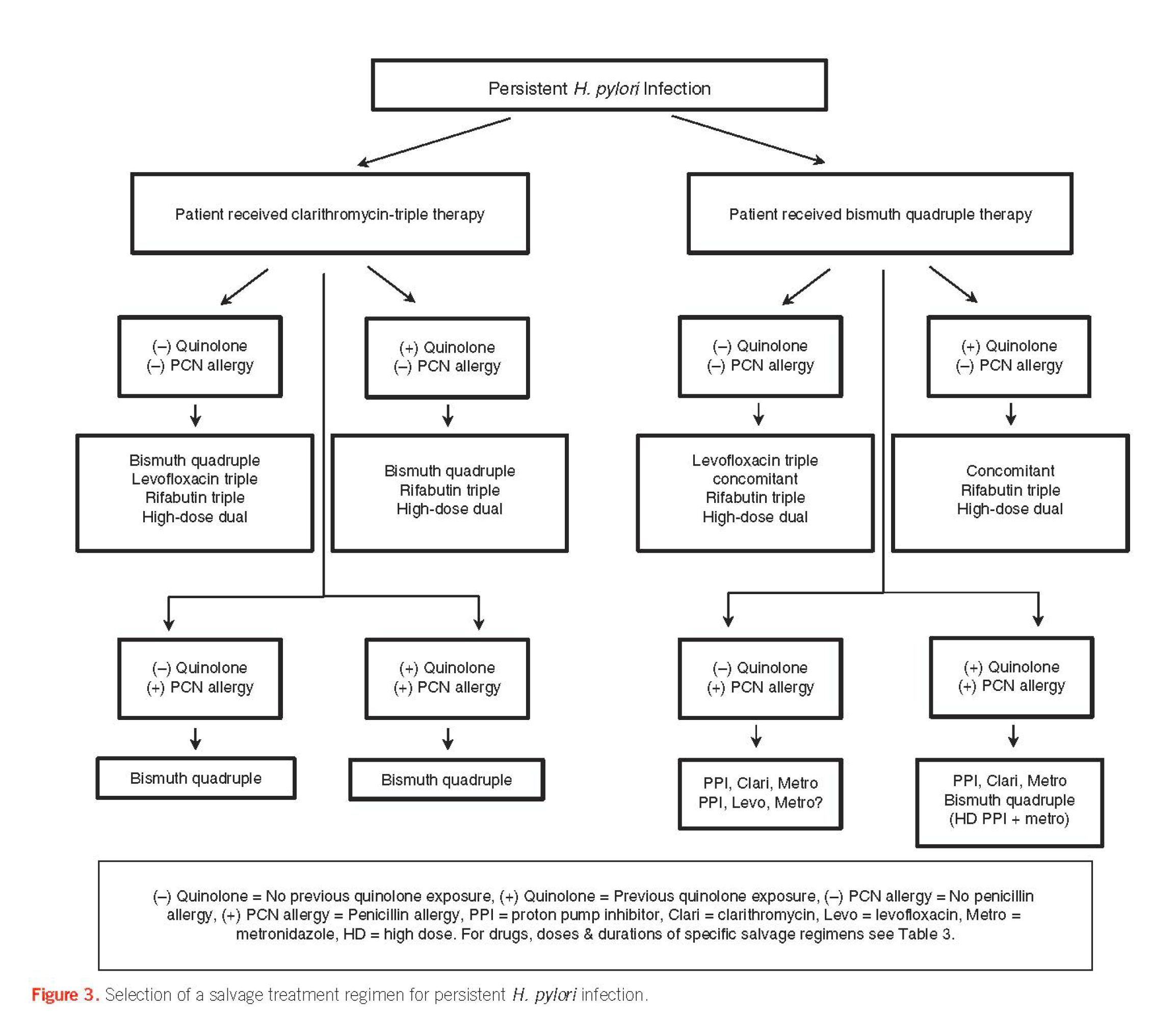
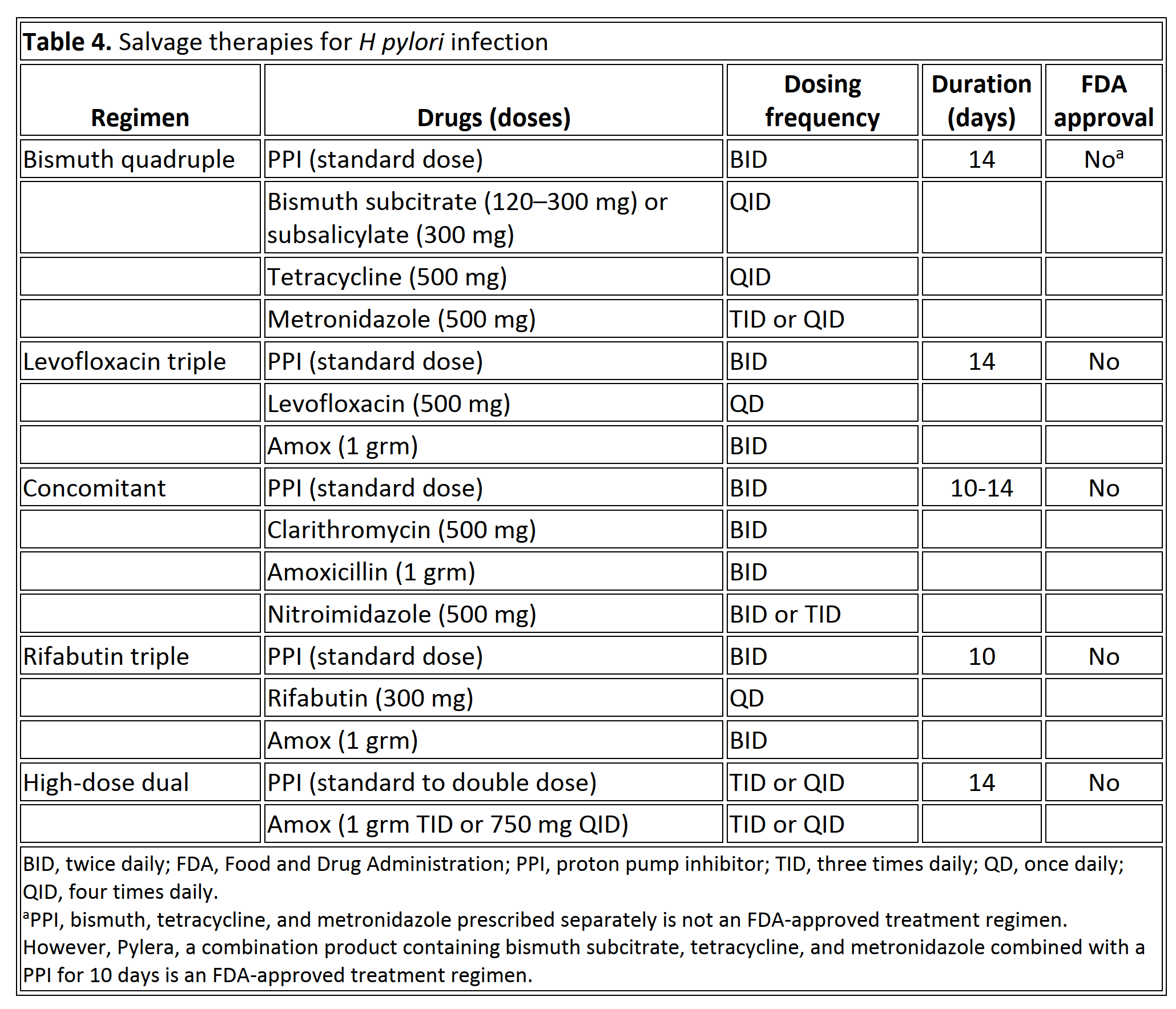
- Testing to prove eradication should be performed using urea breath test, fecal antigen test or biopsy based testing at least 4 weeks after completion of therapy, if positive result then treatment is failed
- Bismuth quadruple therapy or levofloxacin therapy is preferred treatment options for patient received clarithromycin containing treatment first; while clarithromycin or levofloxacin containing treatments are preferred if patient received bismuth quadruple therapy first
Who should receive H. pylori treatment
- All patients tested positive for H. pylori active infection should receive H. pylori treatment
Indications for H. Pylori testing
- All active PUD patients and patients with history PUD
- MALT lymphoma patients
- History of endoscopic resection of early gastric cancer
- Patients with uninvestigated dyspepsia
- GERD patients
- Patients taking long term low dosse aspirin
- Patients on NSAIDs
- Patients with unexplained IDA
- Adults with ITP
Important notes
- Esomeprazole and rabeprazole are preferred to be used in Asian and Caucasian population because the other options are rapidly metabolized in these patients due to CYP2C19 polymorphism
Continue learning
Practice the topics covered in this lecture.