
Orthopedics
Rockwood Classification of Acromioclavicular Joint Injury (Modified Allman and Tossy)
Source presentation · 2 min read
Edits save on this browser. Download a copy for your records.
Definition
- 6 grades classification system for acromioclavicular joint injuries
- A modification for Allman and Tossy’s 3 grade system, the first and second grades are same in both models, while grade three in Allman and Tossy classification is subdivided into four grades in Rockwood classification
- Rockwood classification takes into account
- Acromioclavicular joint
- Coracoclavicular ligament
- Deltoid muscle
- Trapezius muscle
Normal Anatomy
- The line between the inferior aspect of the clavicle and the inferior aspect of the acromion should be straight
- It is okay if the superior aspect don’t match up
- The joint space should be uniform
- Normal Coracoclavicular distance is between 11- 13mm and there should be no greater than 5mm difference between right and left
Presentation section
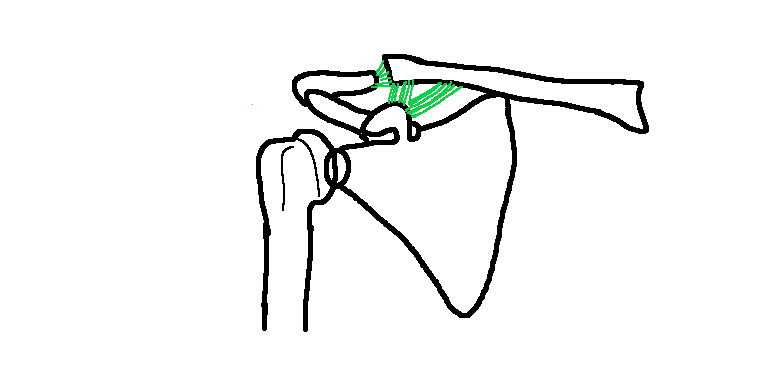
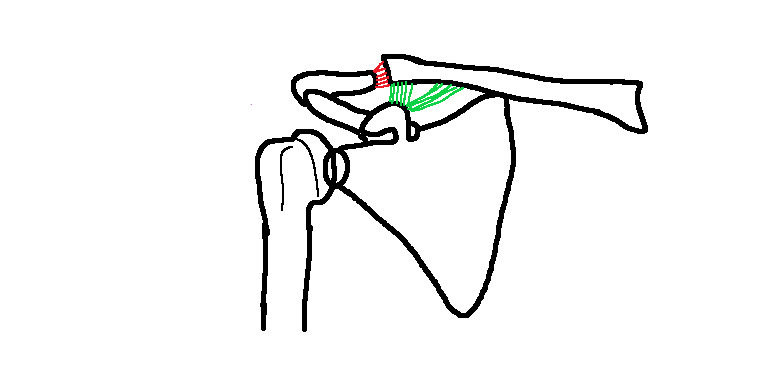
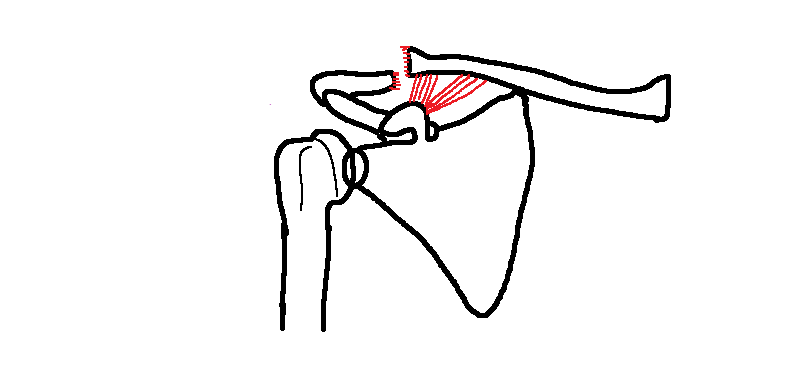
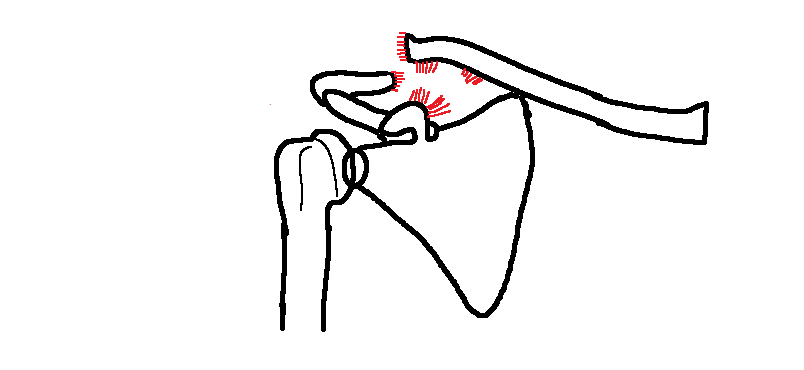
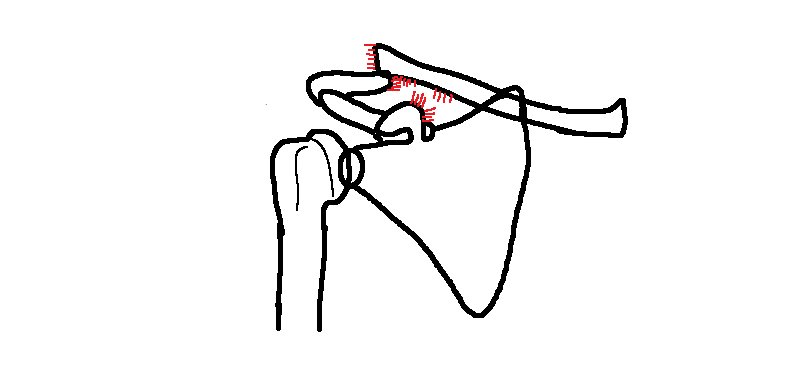
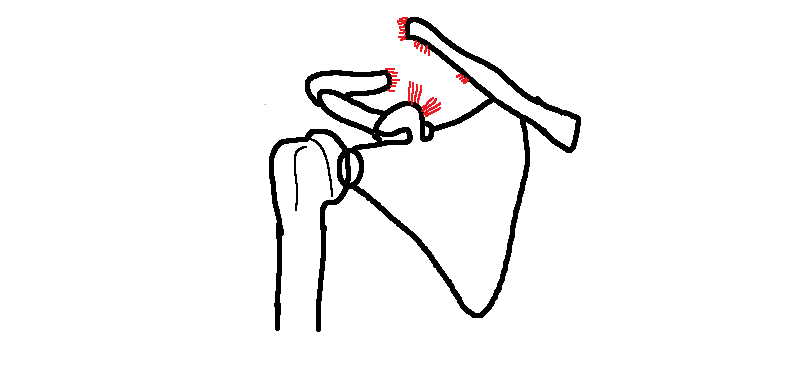
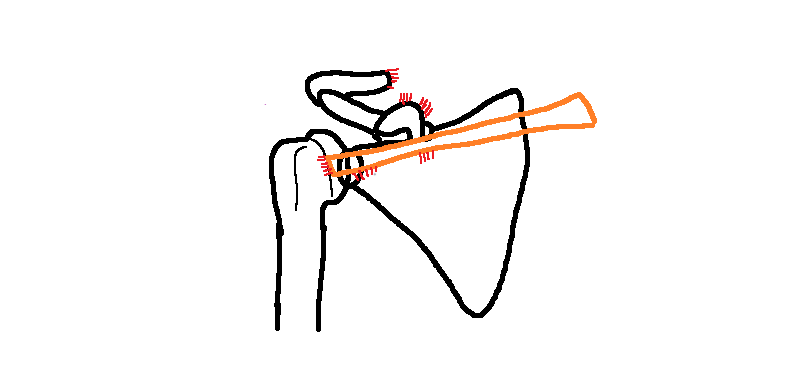
Grade 1
- X ray: normal, the clavicle not elevated in respect to acromion
- Acromioclavicular ligament: Incomplete injury
- Coracoclavicular ligament: no injury
- Joint capsule: no injury
- Trapezius muscle: attached
- Deltoid muscle: attached
Grade 2
- Clavicle elevated but not above superior border of acromion
- Acromioclavicular ligament: complete injury
- Coracoclavicular ligament: Incomplete injury
- Joint capsule: complete injury
- Trapezius muscle: minimal disruption of attachment
- Deltoid muscle: minimal disruption of attachment
Grade 3
- Clavicle elevated above the superior border of acromion, the coracoclavicular distance is less than 25mm
- Acromioclavicular ligament: complete injury
- Coracoclavicular ligament: complete injury
- Joint capsule: complete injury
- Trapezius muscle: complete disruption of attachment
- Deltoid muscle: complete disruption of attachment
Grade 4
- Result from posteriorly directed forces that make the clavicle penetrates the trapezius muscle, sometimes completely.
- Acromioclavicular ligament: completely injured
- Coracoclavicular ligament: completely injured
- Joint capsule: completely injured
- Trapezius muscle: complete disruption of attachment
- Deltoid muscle: complete disruption of attachment
Grade 5
- Clavicle is markedly elevated and coracoclavicular distance is more than 25mm
- Acromioclavicular ligament: completely injured
- Coracoclavicular ligament: completely injured
- Joint capsule: completely injured
- Trapezius muscle: complete disruption of attachment
- Deltoid muscle: complete disruption of attachment
Grade 6
- Inferior displacement of clavicle into the acromion or coracoid process.
- Acromioclavicular ligament: completely injured
- Coracoclavicular ligament: completely injured
- Joint capsule: completely injured
- Trapezius muscle: complete disruption of attachment
- Deltoid muscle: complete disruption of attachment
Continue learning
Practice the topics covered in this lecture.