
Orthopedics
Monteggia Fracture Dislocation: Bado Classification, Clinical Features, Treatment and Complications
Source presentation · 4 min read
Edits save on this browser. Download a copy for your records.
Introduction
- Monteggia fracture-dislocation is any fracture of the ulna associated with a radial head dislocation
- Monteggia occur more commonly in children and rarely in adults
- Diagnosed by forearm X-rays and treated either operatively or non operatively
Mechanism of injury
- Monteggia result from a fall on the outstretched hand with twisting force or a force that lead to hyperextension of the elbow joint
- It also can occur from direct blow to the forearm and from high energy injuries
Classification
- Classified according to Bado classification
Bado classifies Monteggia fractures according to the direction of the radial head dislocation and the direction of the angulation of the ulna fracture into four types, those include:
- Type I
- Type II
- Type III
- Type IV
Bado classification
- Type I
- Anterior dislocation of the radial head + angulated ulna fracture with the apex pointing anteriorly (most common type 60%)
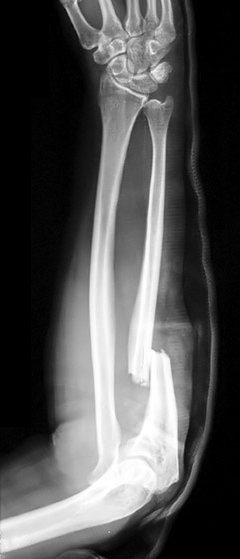
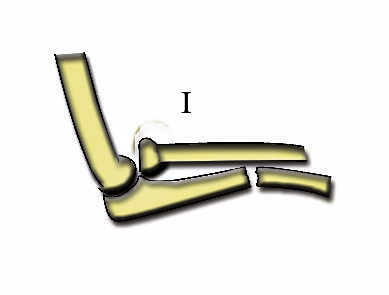
- Type II
- Posterior dislocation of the radial head + angulated ulna fracture with the apex pointing posteriorly (worst prognosis)
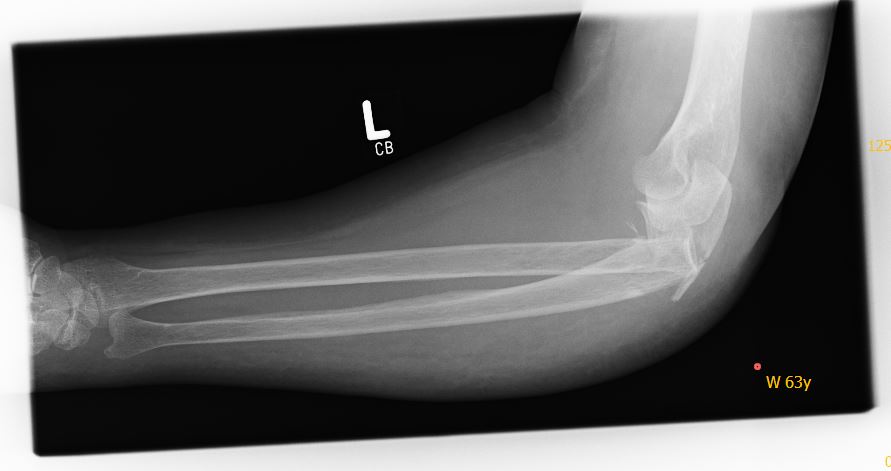
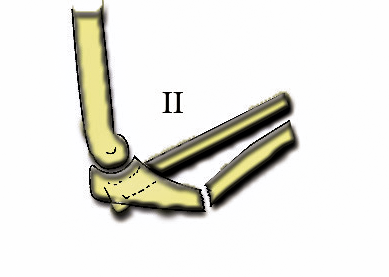
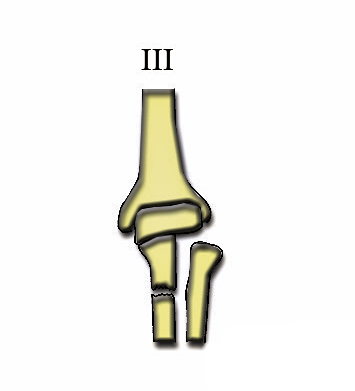
- Type III
- Lateral dislocation of the radial head + ulnar fracture
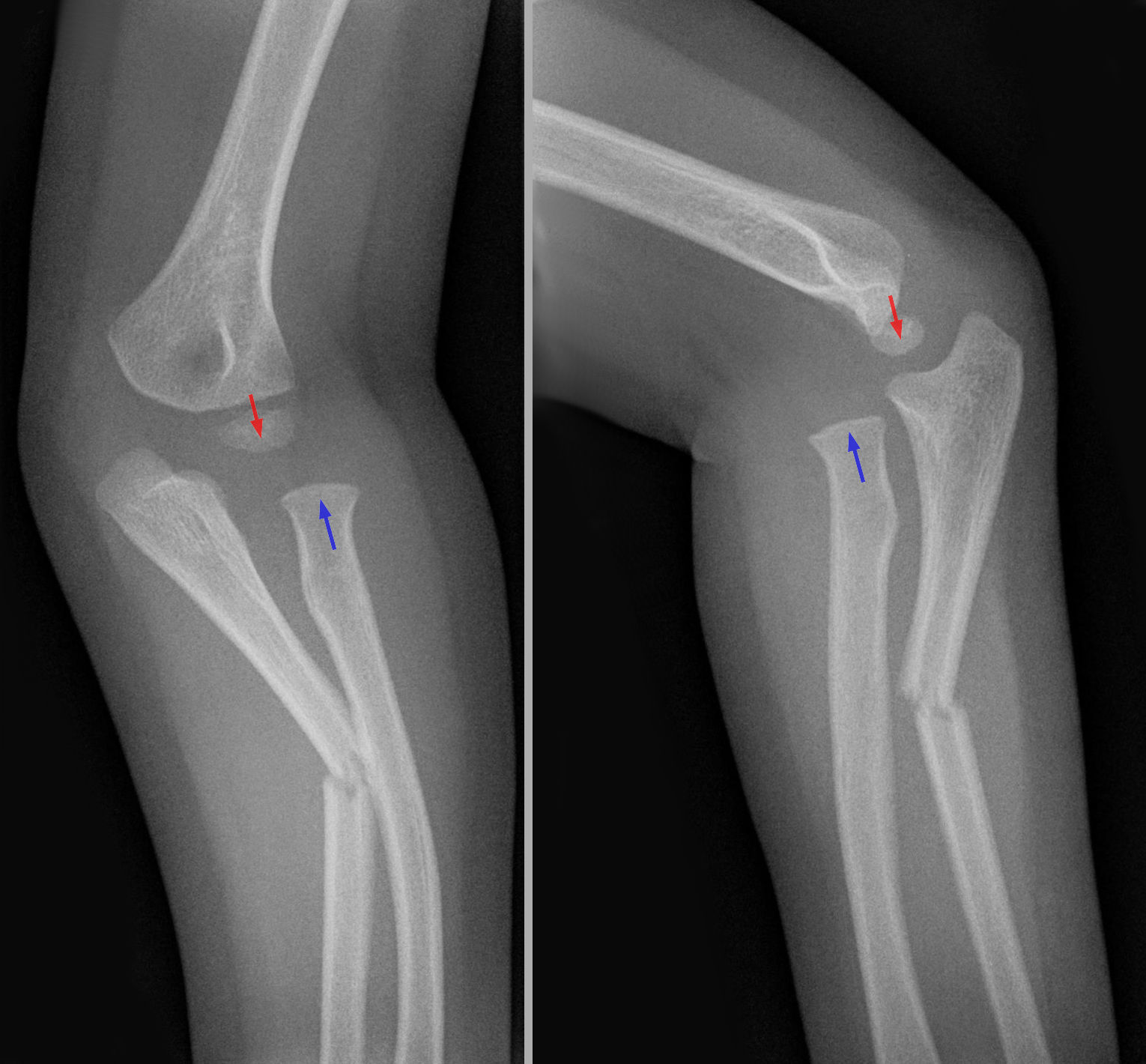
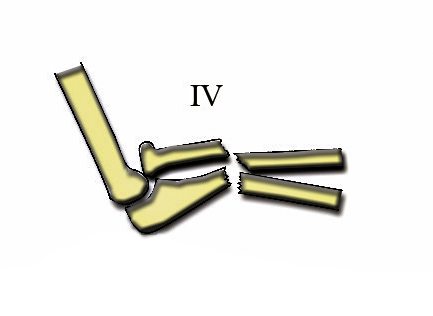
- Type IV
- dislocation of the radial head in any direction + fractures of both the radius and ulna
Clinical features
Symptoms
- Patient present with pain in the forearm and elbow
Physical examination
Look
- Look for Swelling
- Deformity of the ulna is obvious, but the elbow deformity is masked by swelling
- Inspect the lacerations for any evidence of open fracture
Feel
- Feel for tenderness (esp. on the lateral side of the forearm)
- Neurovascular examination is done to look for nerve/vessel injury (esp. radial nerve)
Move
- Patient refuse movement due to pain
- Examination is repeated multiple times to exclude compartment syndrome
Imaging
- Plain radiographs (AP and lateral) are enough for diagnosis
- The radiograph should include the elbow and wrist to detect any injuries to the proximal or distal radioulnar joints
- Radial head is dislocated and does not point to the capitulum anymore (because normally the radius points to the capitulum in all elbow X ray views)
- Ulnar fracture might by incomplete (greenstick) in children and the radial head is not completely ossified so it can be easily missed on X-rays
Associated injuries
- radiocapitellar joint is injured in all of Monteggia fractures
- Proximal radioulnar joint is injured in all of Monteggia fractures except in trans olecranon fracture dislocation
Other associated injuries include:
- Radial head fracture
- Coronoid fracture
Emergency management
- Grossly displaced fracture should be reduced in the emergency department
- Above elbow backslab is applied to support the fracture and prevent forearm rotation
Treatment
Non operative
Operative
Non operative
- Non operative treatment is done in children for the incomplete fractures only (greenstick fractures)
- reduction is achieved by restoring the ulna to its normal length by traction
- Then the forearm is immobilized in above elbow cast for 3 weeks and Re examination is done and radiographs are repeated
- Exercises are started as soon as possible
Operative
- Operative treatment is done when ulnar fracture is a complete fractures
- Operative treatment is achieved with closed reduction of the radial head and ORIF and plating of the ulnar fracture
- Radial head is reduced by closed reduction, if it remains stable throughout full range of motion of the elbow then no further management needed; but if it re dislocates or it can’t be reduced then it has to be explored and repaired
Complications
Early
- Nerve injury: mostly iatrogenic happen during reduction or during surgery, and they are mostly neuropraxias that will recover on their own
- Vascular injury
- Compartment syndrome
Late
- Malunion: occur when the ulna is not perfectly reduced which lead to the radial head remains dislocated and limits elbow flexion
Non union: treated by plating and bone grafting
- Elbow stiffness: occur especially when the radial head dislocation is missed and when the elbow is immobilized for a longer period of time
Continue learning
Practice the topics covered in this lecture.