
Pharmacology
Routes of Drug Administration: Oral, Intravenous, Intramuscular, Intranasal and MORE
Source presentation · 5 min read
Edits save on this browser. Download a copy for your records.
Routes of drug administration
- Enteral routes
- Parenteral routes
- Other routes
PO
- Oral administration involves the most complicated absorption process because it goes through many different absorbing surfaces
- Drugs also goes through the low ph of stomach (1.5) that inactivates a lot of drugs
- To solve this problem: wide range of oral preparations are available including
- Immediate release preparations (which have enteric coating)
- extended release preparations
- have many layers and dissolve slowly leading to slower absorption and prolonged duration of action, better compliance and less toxicity compared to immediate release
- example morphine half life 2-4 hours 6 times daily, 2 times with extended release)
Advantages
- easily self administered
- toxicities and overdose maybe overcome with antidotes like activated charcoal
- economical
Disadvantages:
- limited absorption to some drugs
- food affect absorption
- patient compliance
- first pass metabolism
- Example: amoxicillin tablet
Sublingual/ buccal
- Placement under tongue or between cheek and gum, drug absorbed to circulation.
Advantages:
- rapid absorption
- bypass of harsh GI environment
- avoidance of first pass metabolism
Disadvantages
- limited to certain types of drugs that doesn’t cause irritation
- limited to drugs that is taken in small doses
- Example: sublingual nitroglycerin
Parenteral
- Parenteral introduces drugs directly into systemic circulation through injecting drugs directly into
- Veins (IV)
- Subcutaneous (SC)
- Muscle (IM)
- Dermis (ID)
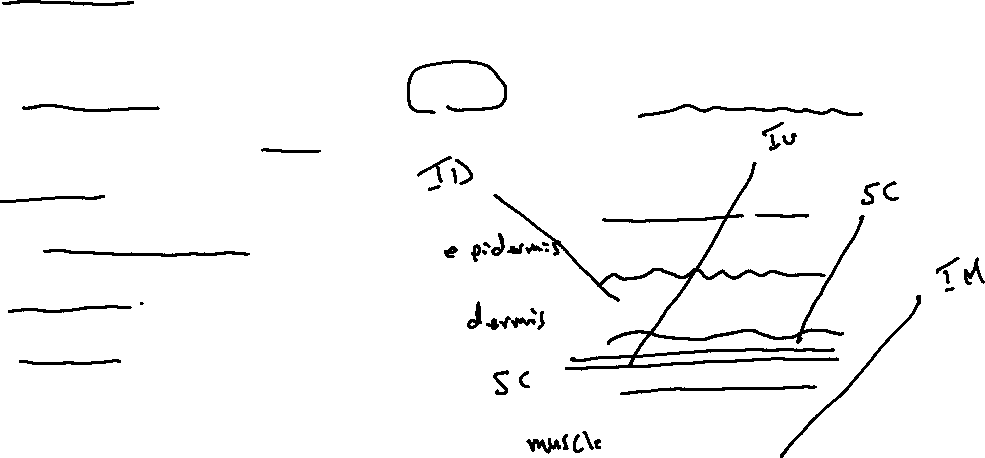
Used for:
- Poorly absorbed Drugs from GI like heparin
- unstable in GI like insulin
- patients unable to take oral like unconscious
- in circumstances required rapid onset (acutely ill patients)
- Advantages include better control over dose
Disadvantages
- Irreversibility
- Pain
- Fear
- Local damage
- Infections
IV
- Most common parenteral route, Drug goes directly into the bloodstream
Advantages:
- Rapid effect and maximum control over the dose
- Ideal for large volumes
Disadvantages:
- Unsuitable for oily substances,
- Bolus injection may result in adverse effects (e.g. acute heart failure)
- Most substances must be slowly injections (hypersensitivity),
- Strict aseptic techniques
- Risk of thrombosis and hemolysis
- Examples: vancomycin IV, heparin IV
IM
- Parenteral
- Drug injected in the muscle, and then diffuse into systemic circulation
Drugs administered IM can be in:
- aqueous solutions which absorbed rapidly
- specialized depot preps which absorbed slowly providing sustained dose over an extended interval
- Advantages: suitable for oily drugs, preferable if patient must self administer
- Disadvantages: can be painful, blood creatine kinase increased
- Example: benzathine penicillin
SC
- Parenteral
- Drug injected into subcutaneous fat and diffuse into blood after by simple diffusion, slower than IV route
Advantages:
- Minimize risks of hemolysis or thrombosis associated with IV injection
- Provide constant , slow and sustained effects
- Disadvantages: if drug causes tissue irritation, this leads to severe pain and necrosis may occur, so this route not used with drugs causes tissue irritation
Example:
- Insulin (SC)
- Heparin (SC)
ID
- Parenteral
- Injection into dermis (under epidermis), have the longest absorption time of the parenteral routes
- Used for
- allergy for a specific drug
- diagnostic testing such as tuberculin test to check for TB
Oral Inhalation
- Provide rapid delivery of the drug to lungs respiratory epithelium,
- suitable for drugs that are gases (example: some anesthetics like isoflurane) and those that can be dispersed in an aerosol
Used for:
- Respiratory disorders like asthma, copd
- Anesthesia
Advantages:
- the drug action is as rapid as IV route
- minimal systemic effects
Disadvantages:
- most addictive route (drug can go to brain quickly)
- difficult to use inhalers
- Examples: albuterol inhaler
Intranasal
- Topical administration of drugs directly into the nose
- The drug put into and cross nasal mucosa and it either treat nasal mucosa or go to blood supply and act systemically
- Used to treat nose disorders like allergic rhinitis
Intrathecal/ Intraventricular
- Drug is given directly to CSF fluid
- Brain and spinal cord are protected by BBB which prevent most drugs from going to brain , so intrathecal route is very good in giving drugs to work on brain and spinal cord directly
Used:
- When local and rapid effects of drugs are needed such as If patient has meningitis or encephalitis
- Used if the drug can’t cross the BBB such as high molecular weight antibiotics or anticancer chemotherapy
Intraarticular
- Drug injected Into the joint space
- E.g. steroid injections given in arthritis to relive joint pain and inflammation
Topical
- Applied to skin or mucosa
- The action intended to work locally at the skin , eyes, intravaginal
Disadvantages:
- some systemic absorption can occur,
- unsuitable for drugs with high molecular weight or poor lipid solubility
Example:
- clotrimazole cream
- hydrocortisone cream
Transdermal
- Differentiate between intradermal , transdermal
- Applied to skin, crosses skin to systemic circulation
- The intention for the drug to cross the skin and enter systemic blood supply to treat disorder unrelated to the skin
Advantages:
- Bypass first pass effect
- Convenient and painless
- Ideal for drugs that are quickly eliminated
Disadvantages:
- Some pt. allergic to patches
- Limited drugs that can be taken in small daily doses
- Examples: nitroglycerin patch, nicotine patch
PR
- Absorbed into rectal mucosa which 50% of rectal region drainage bypasses portal circulation (where first pass metabolism occur) so it is minimized
- prevent destruction of drug in the GI
Useful if:
- patient is vomiting
- drug can’t be taken orally
- patient unconscious
- Disadvantages: drugs may irritate rectal mucosa
- Example: diazepam PR
Continue learning
Practice the topics covered in this lecture.