
Orthopedics
Acromioclavicular Joint Injury: Rockwood Classification, Clinical Features and Treatment
Source presentation · 6 min read
Edits save on this browser. Download a copy for your records.
Overview
- AC injuries are common in athletes and workers who use heavy equipment and they occur in any age, specially 20-40 years age group, they represent more than 40% of all shoulder injuries
- Mild injuries are not associated with any significant morbidity while severe injuries are associated with chronic pain and significant loss of shoulder function
Mechanism of injury
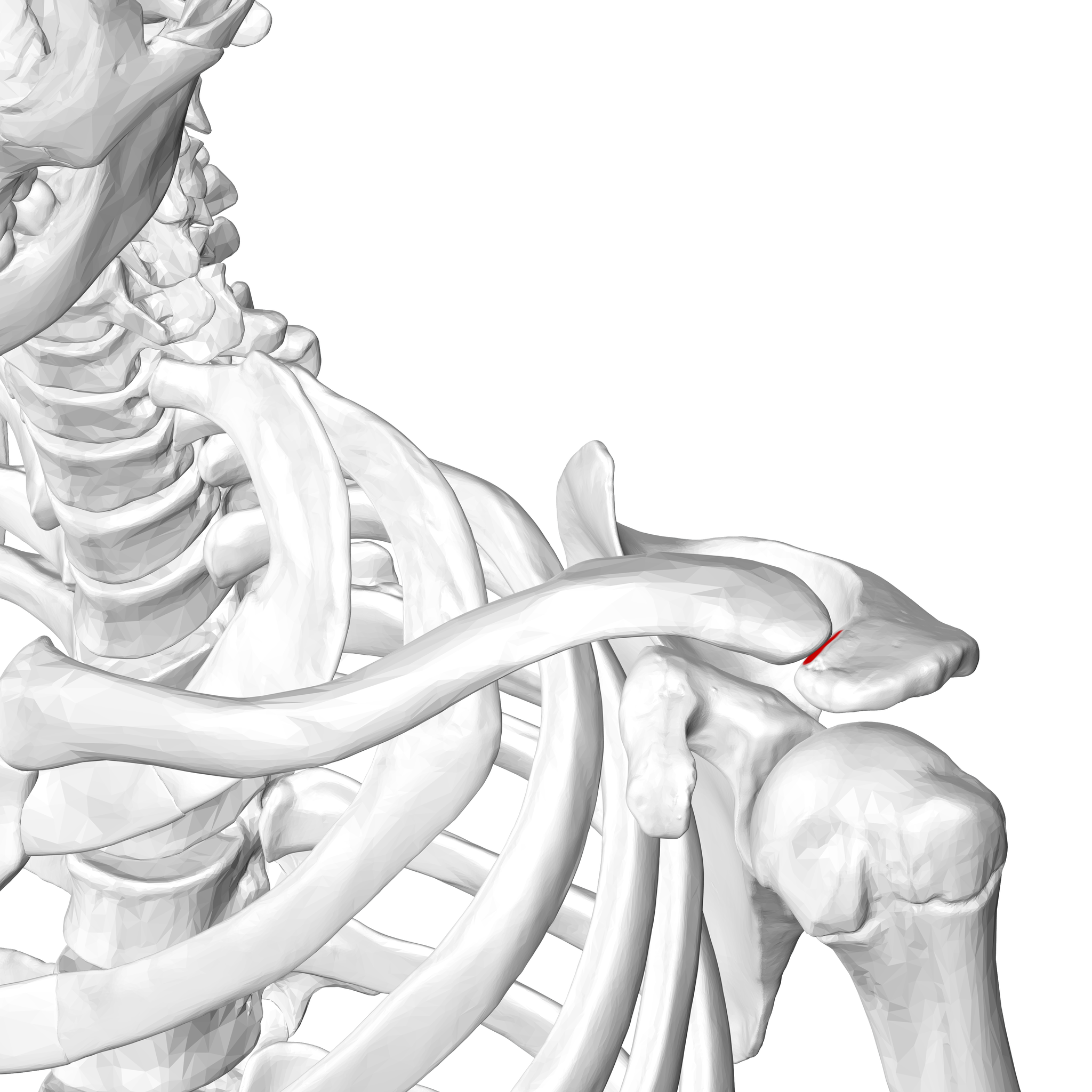
- A fall on the shoulder with arm adducted => AC ligaments are torn first => CC ligaments are torn with higher forces leading to complete dislocation of the joint
- Fall onto an outstretched hand or elbow may also result in AC joint injures
Classification
- Injury is graded according to the Rockwood classification of AC joint injuries
- Rockwood classification is a 6 grade system and it is a modification of Allman and Tossy’s 3 grade system, the first and second grades are same in both systems, while grade three in Allman and Tossy classification is subdivided into four grades in Rockwood classification
- Rockwood classification classify AC joint injures based on:
- Acromioclavicular joint alignment
- Coracoclavicular ligament status
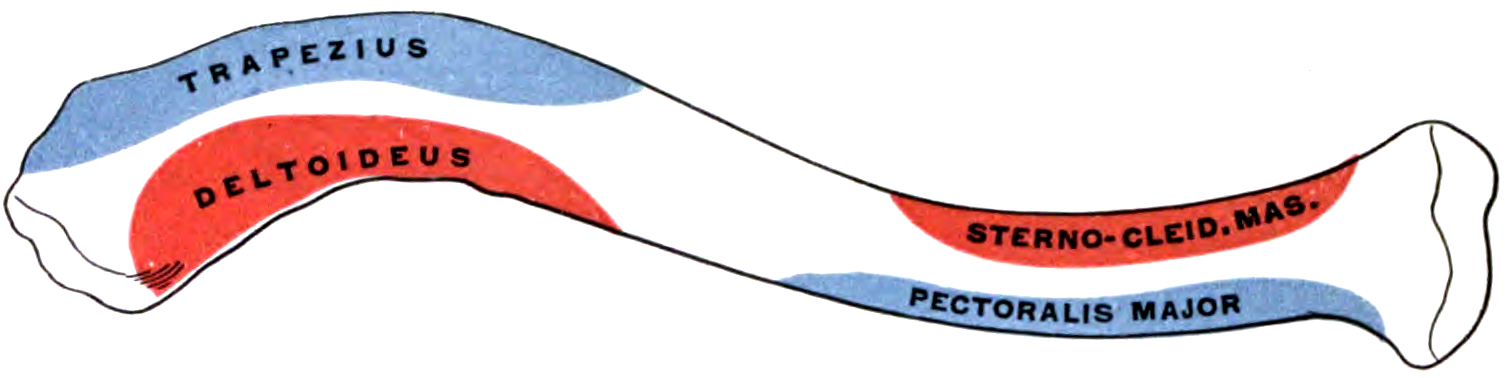
- Deltoid and trapezius muscles status (both attach to the lateral part of the clavicle)
AC Joint Normal Anatomy
- The inferior edge of the clavicle bone and inferior edge of the acromion should be leveled (on the same line) on clavicle AP view with 20 degree cephalic tilt
- It is okay if the superior edges don’t match up
- The joint space should be uniform and joint distance less than 8 mm (normal 5-8 mm)
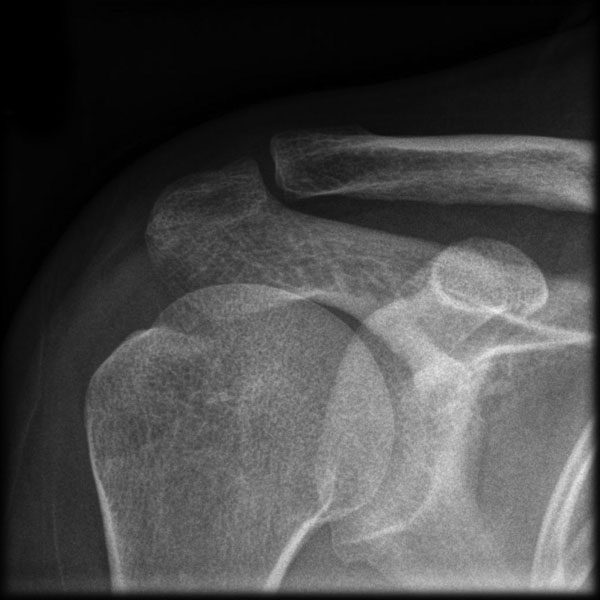
- Normal Coracoclavicular distance is between 11- 13mm and there should be no greater than 5mm difference between right and left
- No soft tissue swelling
Rockwood Grade I
- AC joint sprain
- The clavicle is not elevated in respect to acromion (X ray appears normal)
- Acromioclavicular ligament: sprained
- Coracoclavicular ligament: normal
- AC Joint capsule: normal
- Trapezius muscle: attached
- Deltoid muscle: attached
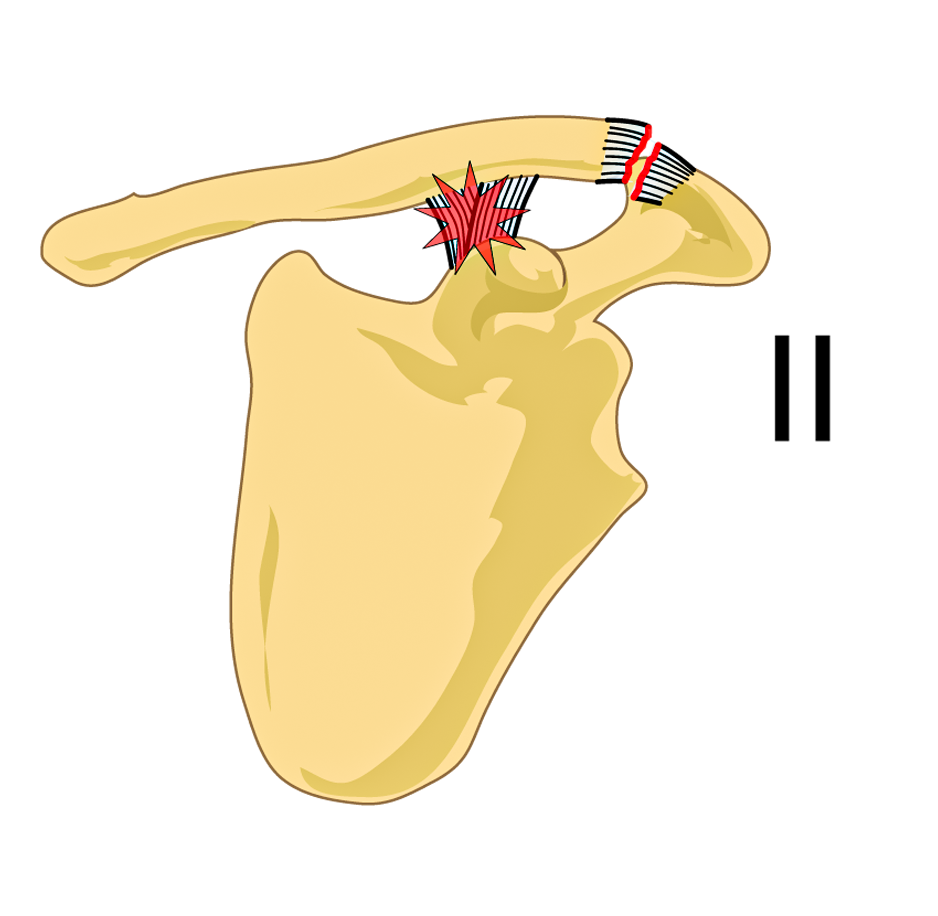
Rockwood Grade II
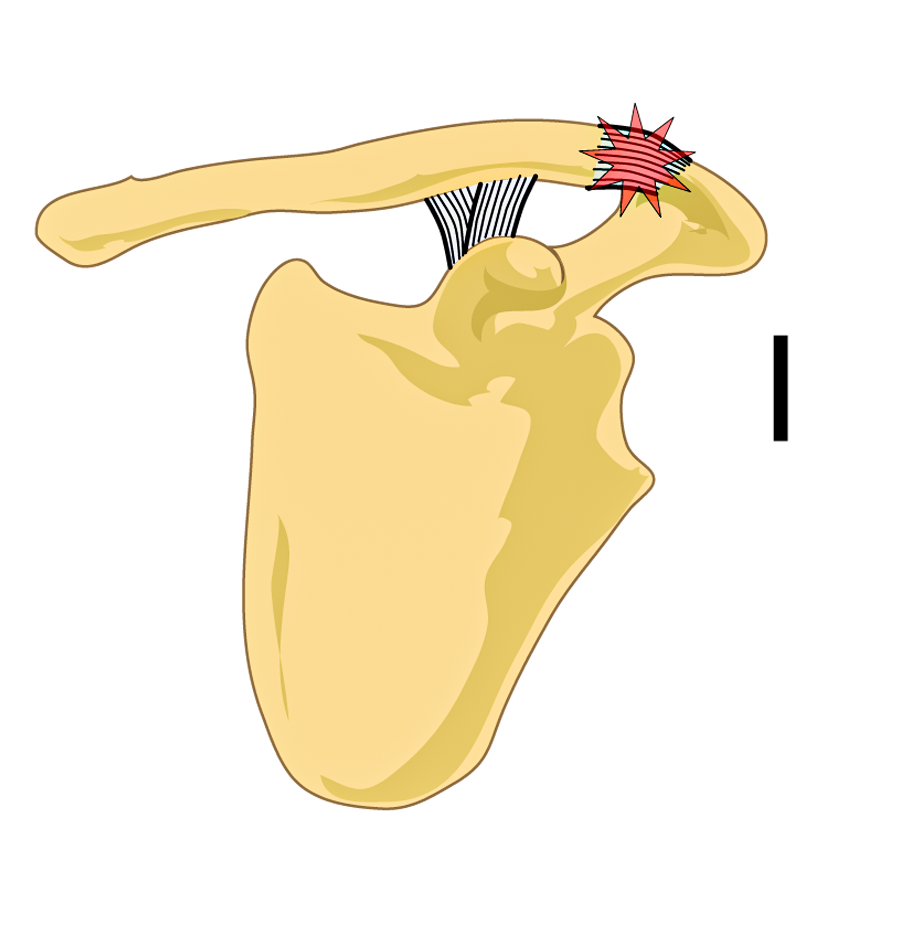
- AC joint subluxation
- Clavicle elevated but not above superior border of acromion
- Acromioclavicular ligament: torn
- Coracoclavicular ligament: sprained
- Joint capsule: torn
- Trapezius muscle: minimal detachment
- Deltoid muscle: minimal detachment
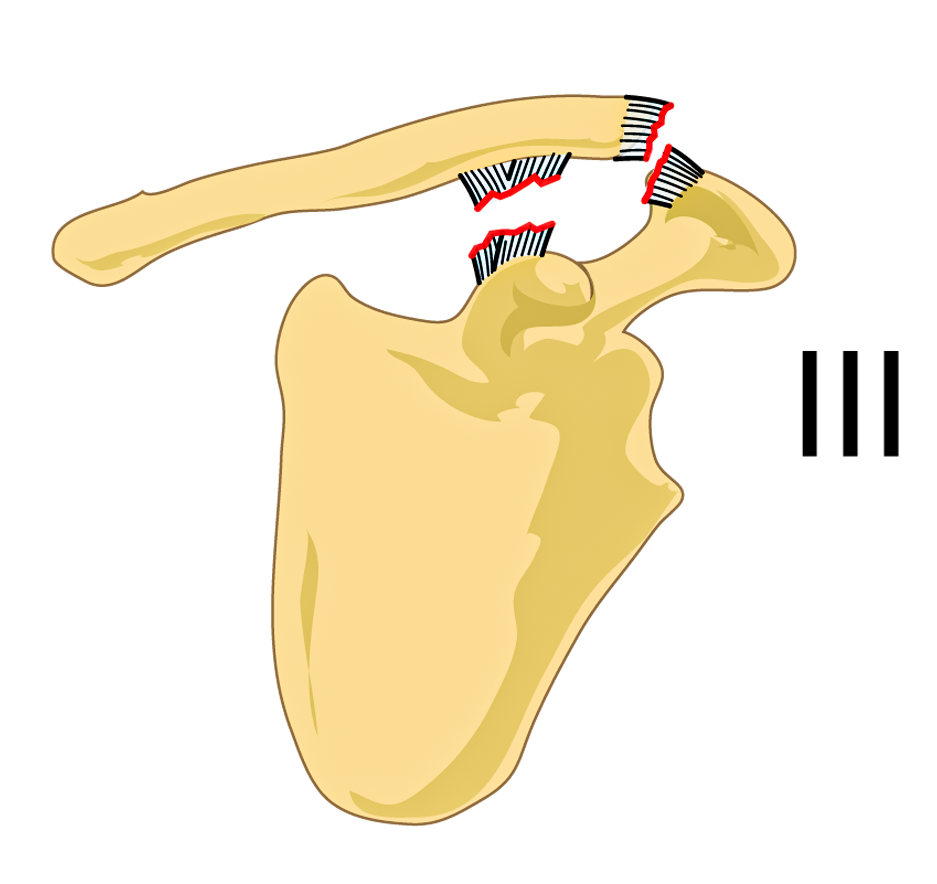
Rockwood Grade III
- AC joint dislocation
- Clavicle elevated above the superior border of acromion, the coracoclavicular distance is less than 25mm
- Acromioclavicular ligament: torn
- Coracoclavicular ligament: torn
- Joint capsule: torn and joint is dislocated
- Trapezius muscle: complete detachment
- Deltoid muscle: complete detachment
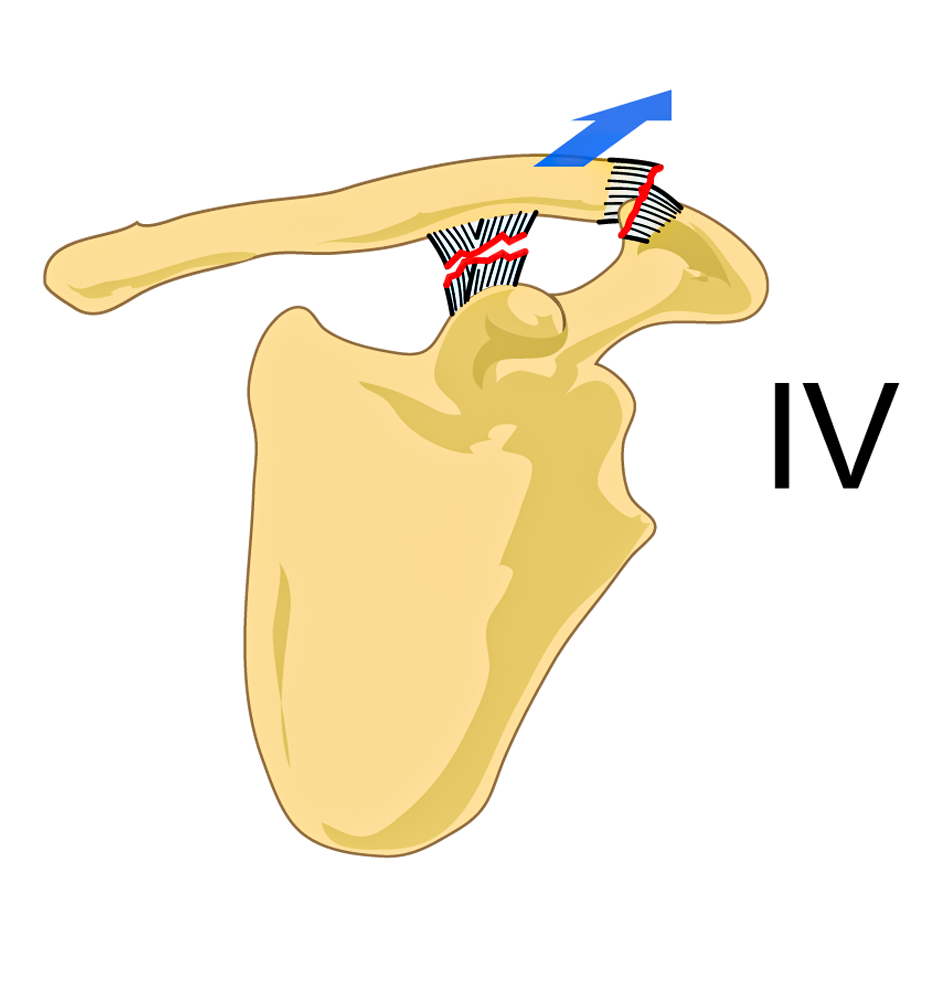
Rockwood Grade IV
- Result from posteriorly directed forces that make the clavicle penetrates the trapezius muscle, sometimes completely.
- Acromioclavicular ligament: torn
- Coracoclavicular ligament: torn
- Joint capsule: torn
- Trapezius muscle: complete detachment
- Deltoid muscle: complete detachment
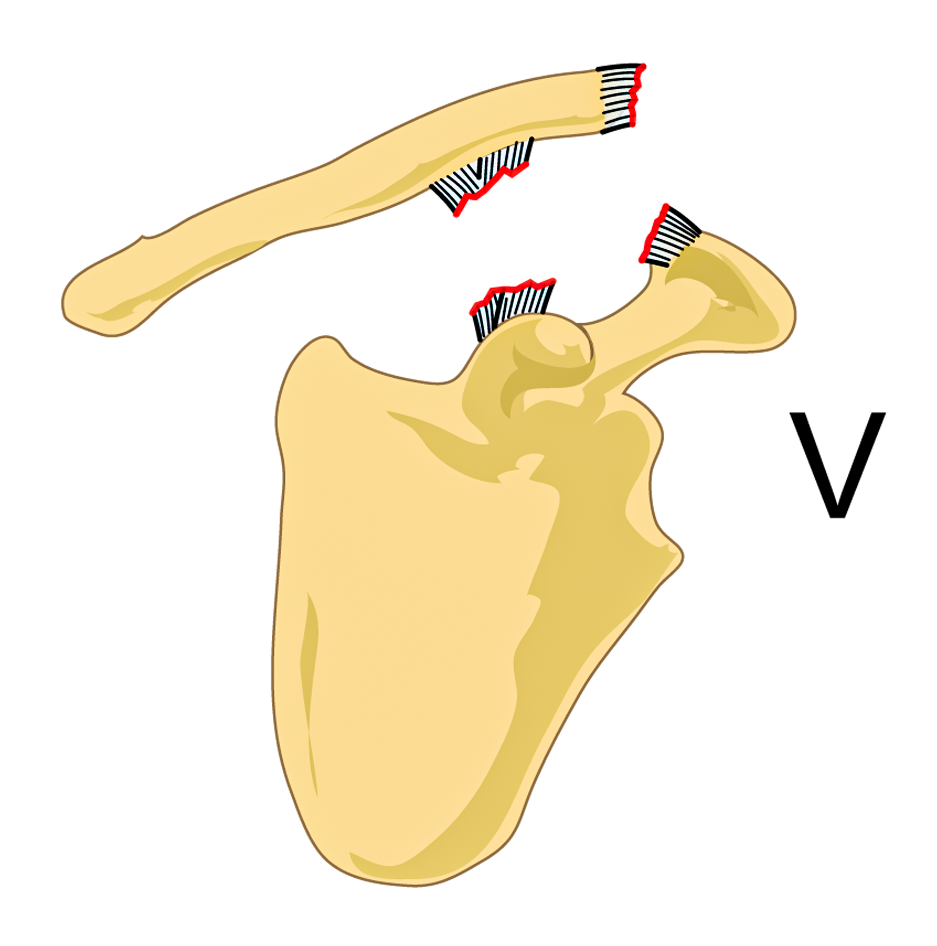
Rockwood Grade V
- Clavicle is markedly elevated and coracoclavicular distance is more than 25mm
- Acromioclavicular ligament: torn
- Coracoclavicular ligament: torn
- Joint capsule: torn
- Trapezius muscle: complete detachment
- Deltoid muscle: complete detachment
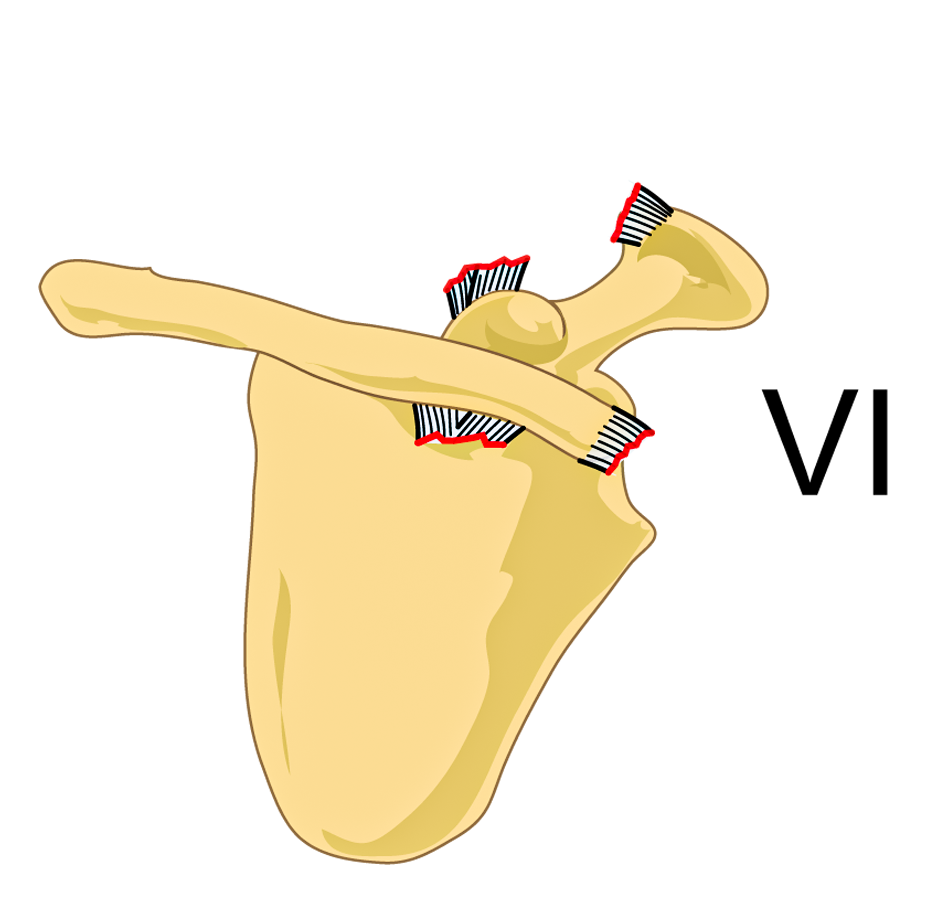
Rockwood Grade VI
- Inferior displacement of clavicle beneath the coracoid process
- Acromioclavicular ligament: torn
- Coracoclavicular ligament: torn
- Joint capsule: torn
- Trapezius muscle: detached
- Deltoid muscle: detached
Clinical features
- Patient complain of shoulder pain and swelling; and they can locate where the pain exactly is (AC joint)
- On examination, there is tenderness while palpating the shoulder, if there is no deformity seen then the injury is either Grade I or II, but if there is deformity then it is Grade III,IV,V,VI
- Shoulder movements are limited due to pain but active abduction to 45 degrees would exclude rotator cuff tear
Imaging
- AP clavicle with 20 degrees cephalic tilt: this view show inferior edge of the clavicle at the same line as the inferior edge of acromion
- axillary views: confirm whether there is posterior displacement of the clavicle (Rockwood type IV)
Emergency management
- ATLS trauma protocol
- closed reduction is not helpful in these injures
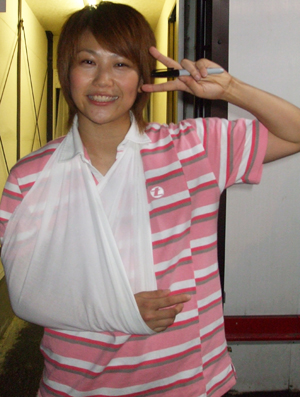
- Provide a sling and pain relief
Definitive management
- Grade 1 and 2 (sprains and subluxations) are treated with sling immobilization for around 1 week until pain subsides and patient encouraged to exercise shoulder, elbow and fingers
- Grade 3 (dislocations) is treated non operatively unless there is extreme prominence of the clavicle, or in patients who want to resume their strenuous overarm or overhead activities then treated operatively
- Grade 4,5,6 are treated operatively
- Operative treatment include accurate reduction, and fixation of the clavicle with the acromion is done using a hook plate
- There is also the modified Weaver- Dunn procedure
Modified Weaver-Dunn procedure
- Modified Weaver- Dunn include excision of the lateral end of the clavicle and coracoacromial ligaments are transferred to the outer end of the clavicle and attached by trans osseous sutures
- Clavicle is anchored to the coracoid with anchors or slings to reduce the tension on the repair during the healing phase
- Elbow and forearm exercises begun one day after operation and assisted shoulder exercises are started 2 weeks later, active movements are started 4-6 weeks after and strenuous lifting is avoided for 6 months
Complications
- Supraspinatus tendonitis: is sometimes associated with AC joint injures and supraspinatus tendinitis may occur directly due to the primary injury or may result from edema or inflammation occurring after the initial injury
- Unreduced dislocation: affects function, treated with reconstruction of CC ligaments, if failed then Modified Weaver- Dunn procedure is done
- Ossification of ligaments: especially in severe injures, ossification of ligaments lead to late rotator cuff dysfunction
- Osteoarthritis is a late complication that might occur with these injures
Continue learning
Practice the topics covered in this lecture.