
Orthopedics
ASIA Scale For Spinal Cord Injury Explained
Source presentation · 3 min read
Edits save on this browser. Download a copy for your records.
Spinal Cord Injury Classification According to ASIA
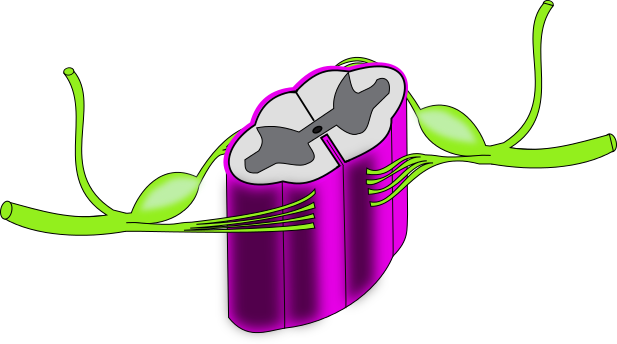
Spinal cord injury classification
- ASIA classification of spinal cord injury is the gold standard nowadays to classify these injuries
- To classify spinal cord injury according to American spinal injury association, neurological examination has to be done looking for sensory or motor deficits
- Motor examination is done using muscle power of the key muscles only looking for any motor deficits
- Sensory examination is done using superficial modality (pinprick) and deep modality (touch) only looking for any deficits
Key muscles
| C5 | Elbow flexors |
|---|---|
| C6 | Wrist extensors |
| C7 | Elbow extensors |
| C8 | Finger flexors |
| T1 | 5th finger abductors |
| L2 | Hip flexors |
| L3 | Knee extensors |
| L4 | Ankle dorsiflexors |
| L5 | Big toe extensors |
| S1 | Ankle plantar flexors |
Neurological examination
- Muscle power is graded out of 5 according to the MRC grading
- 0/5: no muscle movement
- 1/5: visible muscle movement but with no movement at the joint
- 2/5: movement at the joint but not against gravity
- 3/5: movement against gravity, but not against added resistance
- 4/5: movement against resistance, but less than normal
- 5/5: normal power
- Sensory is graded out of 2 according to
- 0: absent sensation
- 1: altered
- 2: normal
Classify by following these steps
- Determine the sensory levels for right and left sides (each side graded independently), intact dermatome must be responding to pinprick and light touch sensation
- Determine the motor levels for right and left sides (each side graded independently), motor level defined by the lowest key muscle (on the body) with grade 3 power and the muscles above this muscle are grade 5 power
- Determine the neurological level of injury: NLI refers to the lowest segment with intact sensation and motor function (grade 3 muscle power), NLI is the lower level of the sensory and motor levels assigned in step 1 and 2
- Determine if the injury is complete or incomplete: if patient can’t voluntarily contract anal sphincter and sensory exam of S4, S5 is 0 and deep anal pressure is negative then injury is complete, otherwise injury is incomplete
- Now you can determine the injury grade according to ASIA impairment scale
ASIA impairment scale (AIS)
| Grade | Description |
|---|---|
| A | Complete: no sensory or motor at S4-5 |
| B | Sensory incomplete: sensory is preserved below neurological level of injury including sensation at S4-5, but motor function is preserved only to three levels below the motor level on either side of the body |
| C | Motor incomplete: motor is preserved at the S4-5 or the patient sensory is preserved at S4-5 with preservation of more than 3 motor levels below the level of injury (less than half key muscles below level of injury have muscle power equals to 3 or more) |
| D | Motor incomplete: same as AIS C with more than half of the key muscles below level of injury have muscle power grade of 3 or more |
| E | Normal |
Continue learning
Practice the topics covered in this lecture.