
Orthopedics
Evans Jensen Classification of Intertrochanteric Fractures of The Hip
Source presentation · 2 min read
Edits save on this browser. Download a copy for your records.
Definition
- Based on the stability of the fracture after close reduction and skeletal traction
- Describes fracture patterns as stable or unstable, based on the integrity of the posteromedial bony cortex. Stable fractures have intact or minimally comminuted posteromedial cortex, while unstable fractures has greater comminution of the posteromedial cortex
- Unstable fractures after reduction can be converted to stable if the posteromedial opposition can be achieved
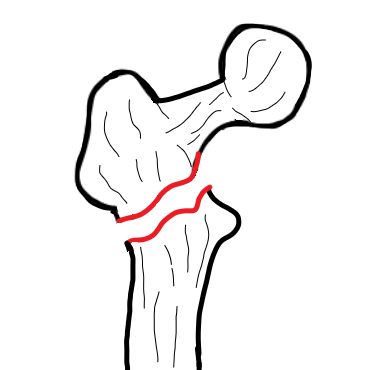
- Reverse oblique pattern was considered inheritably unstable fracture as distal femur has tendency to drift medially due to adductor pull
Classification
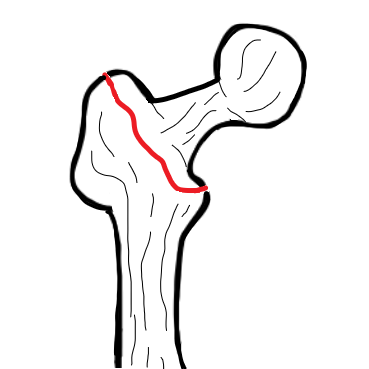
- Grade 1 (Stable)
- A: two part non displaced fracture
- B: two part displaced
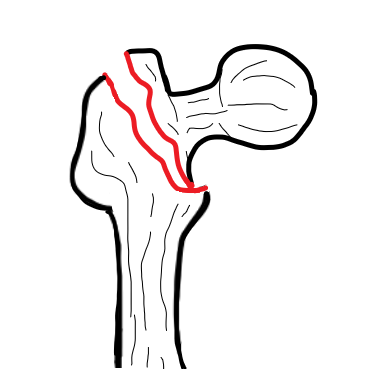
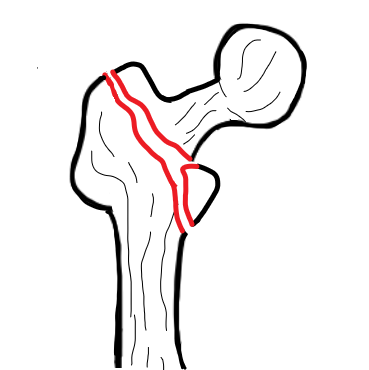
- Grade 2 (Non stable)
- A: three part fracture with separate grater trochanter fragment
- B: three part fracture with separate lesser trochanter fragment
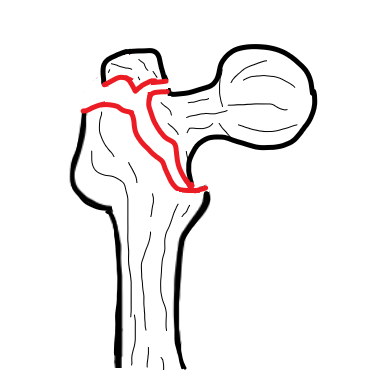
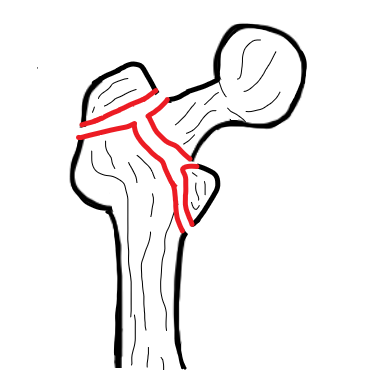
- Grade 3 (Non stable)
- four part fracture
Grade 1 A
- Two part fracture
- Non displaced
- Stable
Presentation section
Grade 1 B
- Two part fracture
- Displaced
- Stable after reduction
Grade 2 A
- Three part fracture with separate greater trochanteric fragment
- Loss of posterolateral support provided by greater trochanter
- Non stable
Grade 2 B
- Three part fracture with separate lesser trochanteric fragment
- Loss of medial support provided by lesser trochanter
- Non stable
Grade 3
- Four part fracture
- Include the reverse oblique fractures
- Unstable
Continue learning
Practice the topics covered in this lecture.