
Clinical medicine
Peritonsillar Abscess (Quinsy): Pathophysiology, Clinical Features, Diagnosis and Treatment
Source presentation · 3 min read
Edits save on this browser. Download a copy for your records.
Peritonsillar abscess
- Peritonsillar abscess (quinsy) is collection of pus behind the tonsil due to infection
- It most commonly seen in adolescents and young adults.
- It may lead to serious complications such as airway compromise or aspiration pneumronia
Etiology
- Group A streptococci and mixed oropharyngeal anaerobes are the most common pathogens
- More than four bacterial isolates per abscess typically recovered by needle aspiration.
Epidemiology
- It is more common than retropharyngeal and lateral pharyngeal abscesses
Pathophysiology
- It is caused by bacterial invasion through the capsule of the tonsil, leading to cellulitis and subsequently abscess formation in the surrounding tissues.
Clinical features
- The classic presentation is an adolescent with a recent history of acute pharyngotonsillitis who suddenly develops sore throat, fever, trismus, drooling, muffled (hot potato) voice, and dysphagia.
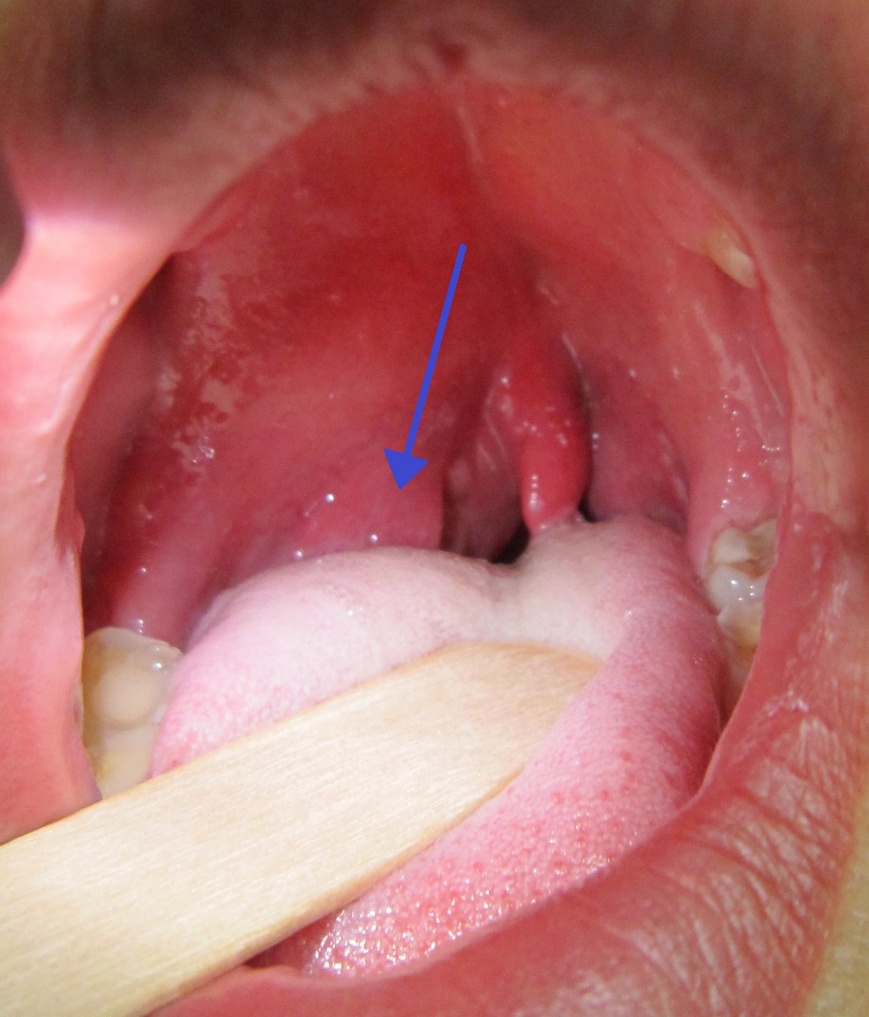
- Physical examination reveals an asymmetric tonsillar bulge with displacement of the uvula away from the affected side. As a rule, the affected tonsil is anteriorly and medially displaced.
- An asymmetric tonsillar bulge is diagnostic, but it may be poorly visualized because of trismus.
Diagnosis
- Diagnosis can be made through careful visualization of the oral cavity, there will be uvular deviation away from the abscess, soft palate displacement and localized fluctuance
- In toxic appearing patients, examination is not preferred because it may lead to airway compromise and patient referred for CT with contract or ultrasound
- But in typical cases, imaging studies are unnecessary
Treatment
- Treatment includes surgical drainage, pain control, fluids and antibiotics
- Antibiotics should cover group A streptococci and anaerobes. (clindamycin IV or ampicillin/sulbactam IV)
- Fluids should be given because patient maybe dehydrated due to decrease oral intake and pain control can be given IV or locally
- Surgical drainage may be accomplished through needle aspiration, incision and drainage, or tonsillectomy.
- Needle aspiration can involve aspiration of the superior, middle, and inferior aspects of the tonsil to locate the abscess.
- Intraoral ultrasound can be used to diagnose and guide needle aspiration of a peritonsillar abscess. General anesthesia may be required for the uncooperative patient.
- Approximately 95% of peritonsillar abscesses resolve after needle aspiration and antibiotic therapy.
- The 5% with infections that fail to resolve after needle aspiration require incision and drainage.
- Tonsillectomy should be considered if there is failure to improve within 24 hr of antibiotic therapy and needle aspiration, history of recurrent peritonsillar abscess or recurrent tonsillitis, or complications from peritonsillar abscess.
- A rare complication is rupture of the abscess, with resultant aspiration pneumonitis.
Continue learning
Practice the topics covered in this lecture.