
Clinical medicine
Extraglottic Airway: Supraglottic and Retroglottic Devices, Advantages and Disadvantages
Source presentation · 3 min read
Edits save on this browser. Download a copy for your records.
Extraglottic airway
- It refers to a diverse collection of devices that are blindly inserted into the pharynx to provide an airway for ventilation and delivery of anesthetic gases without the need for tracheal intubation (they create patent airway without entering the trachea)
- Extraglottic airway is less invasive than tracheal intubation, it also provides more reliable airway than a face mask for spontaneous ventilation and for PPV
- Extraglottic devices are most commonly used in the ED after a failed ETT tube, but may also be used primarily during cardiac arrest, for difficult mask ventilation or as part of rapid sequence airway procedures
- It is critical to always have an appropriately seized EGD available during airway management to place the device in case difficulties are encountered but don’t rely on an EGD to the exclusion of surgical airway when critical hypoxemia is encountered
- EGDs don’t protect trachea from obstruction or aspiration , they maybe used for several hours until a definitive airway can be secured
Advantages
Advantages of EGDs include:
- Faster and easier to apply than an ETT tube
- Reduced anesthetic requirements
- Reduced need for muscle relaxation
- Avoidance to other risks that comes with tracheal intubation (trauma to teeth, sore throat, and bronchospasm)
Disadvantages
- Disadvantages include smaller seal pressures than ETT tubes which means ineffective ventilation when higher airway pressures are required , also they provide no protection from laryngospasm, and older EGDs models provide less protection from gastric regurgitation and aspiration than newer models
Classification
- Supraglottic airways: that include a mask that sits internally over the glottic opening
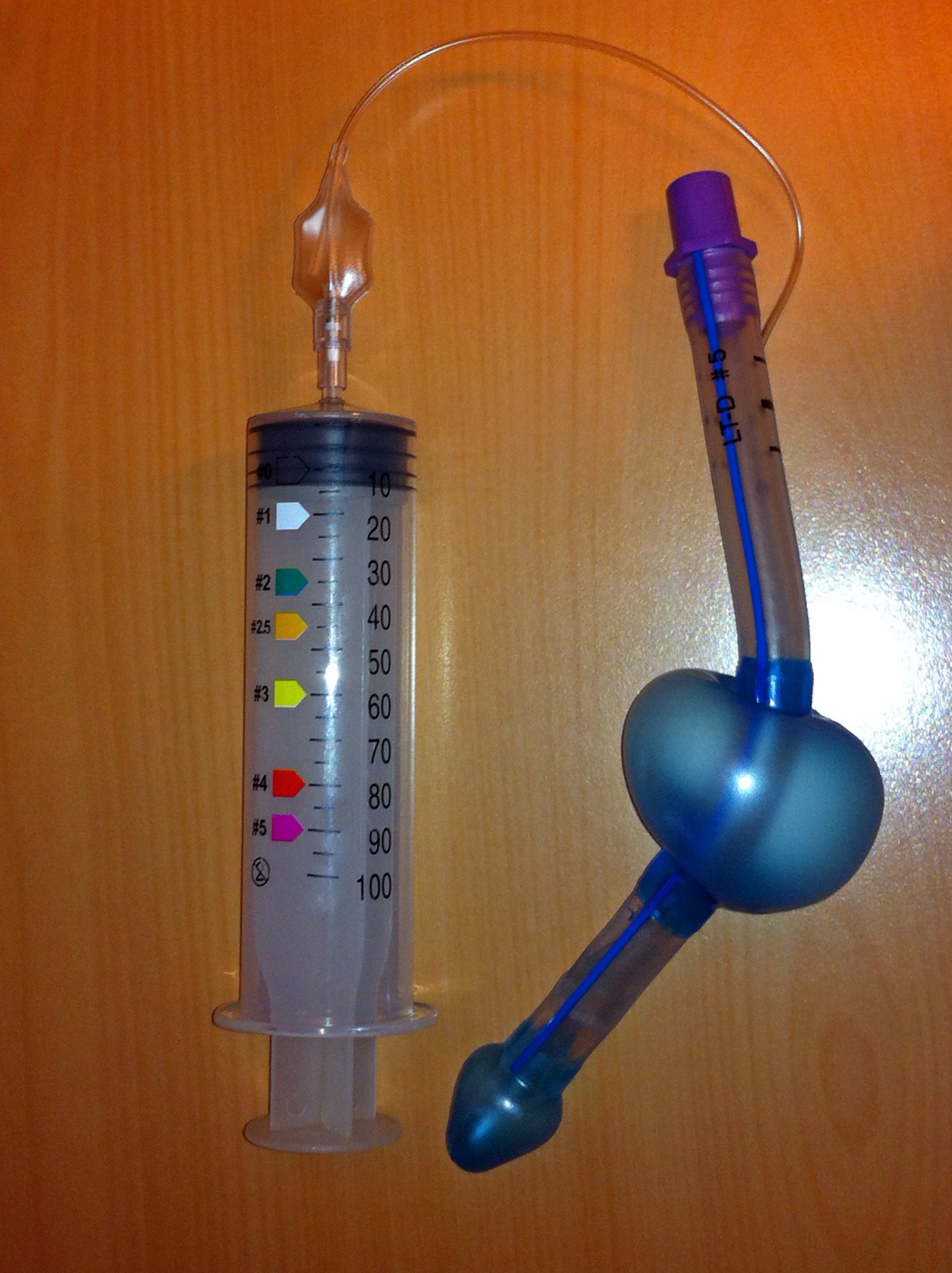
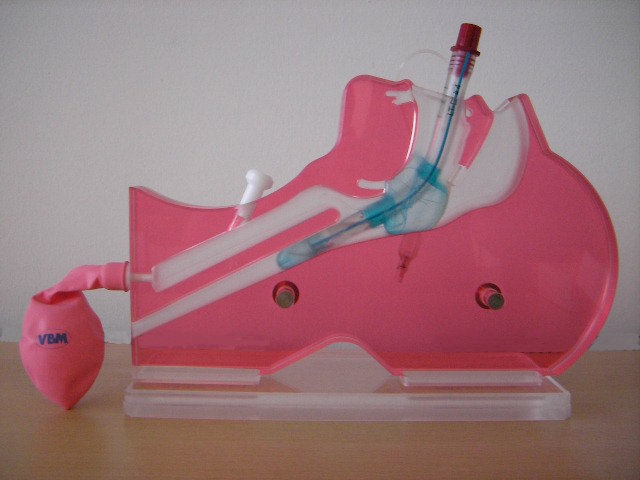
- Retroglottic airways: dual balloon devices that sit within the proximal esophagus and include distal and proximal balloons to direct the ventilation that occurs through holes between the two balloons into the airway
- Many of these devices include a channel for gastric decompression (theoretically lessens the risk of aspiration) and some facilitate blind or endoscopic intubation
- All EGDs can be placed without directly seeing the glottis (also called "blind" placement)
Supraglottic airways
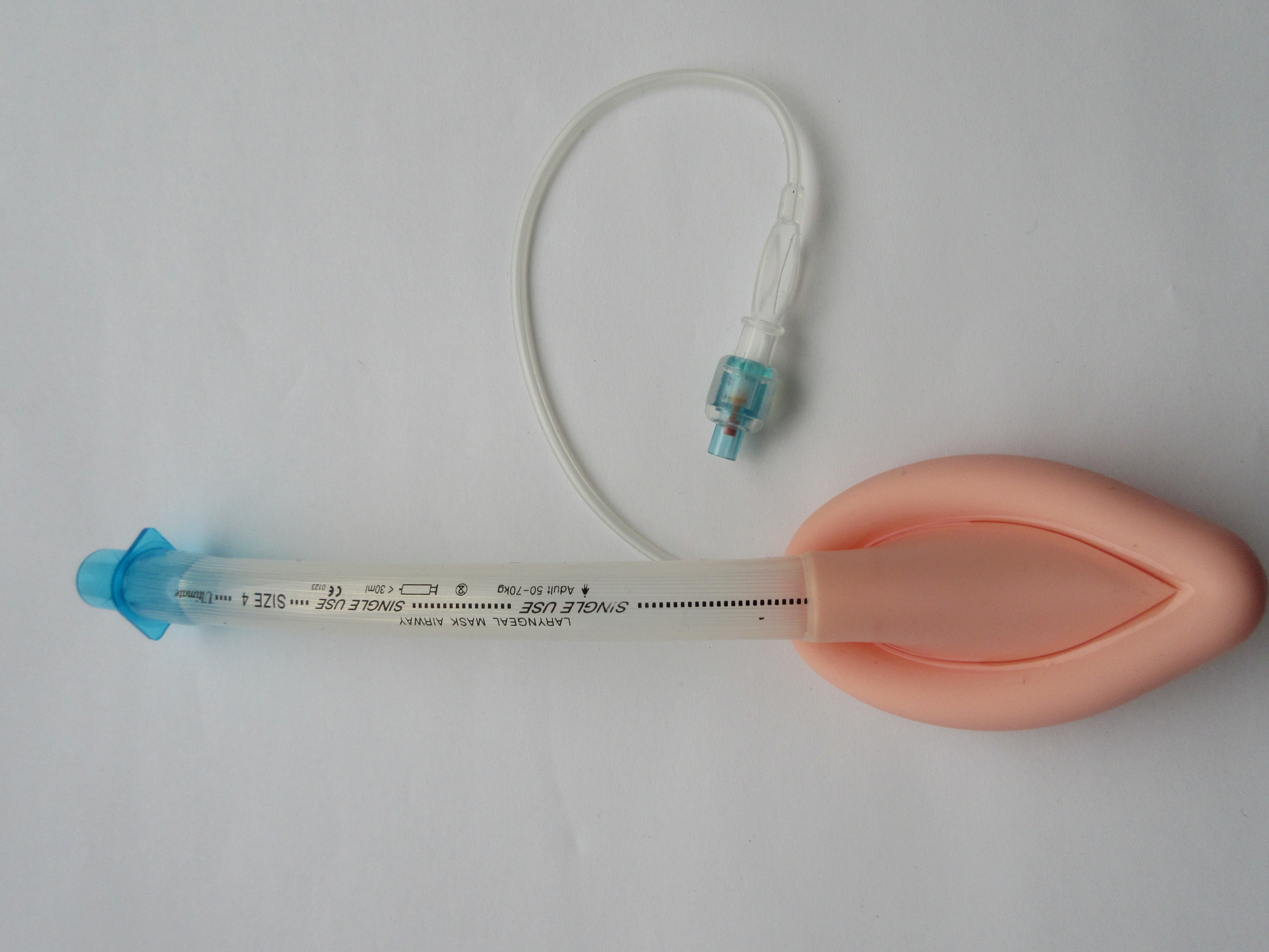
- Supraglottic airway devices (SGAs) create a seal over the glottic opening to create an airway for ventilation
- Examples of SGAs include: ambu auragain, LMA supreme, LMA Protector, LMA fastrach, inter surgical IGEL , AND Cook Gas AirQ.
- The most commonly used SGA and extraglottic device in general is the laryngeal mask airway (LMA).
SGAs
- SGAs can be placed in under 30 seconds, making them advantageous for emergency use and has a success rate of 98%
- Serious complications are rare and usually result from nerve and soft tissue trauma in the pharynx during placement.
Retroglottic airways
- Retroglottic airway devices (RGAs) dual balloon device that pass behind the glottis and into the esophagus to create a seal allowing oxygen to be delivered directly to the trachea.
- Examples include: the King laryngeal tube, esophageal trachea combitube, and the rusch easyTube
- Like SGAs, most complications from RGAs result from trauma to the pharynx during placement.
Continue learning
Practice the topics covered in this lecture.