
Clinical medicine
Head Tilt/Chin Lift, Jaw Thrust, Oropharyngeal Airway and Nasopharyngeal Airway
Source presentation · 5 min read
Edits save on this browser. Download a copy for your records.
Airway management
- Patients with GCS of 8 or less may have lost pharyngeal muscle tone, cough reflex and swallow reflex (can’t protect their airway) so they need airway management
- We have several different modalities of airway management
Modalities of airway management
Basic airway management:
- Maneuvers: head tilt/chin lift and jaw thrust
- Airway adjuncts: OPA and NPA
Advanced airway management:
- EGD and ETT tube
- Surgical airway: cricothyrotomy and tracheostomy
Maneuvers
- Head tilt/ chin lift: it is achieved by tilting the head back while keeping the mouth closed (teeth approximated) (sniffing position)
- Extension of the head lead to posterior oropharynx get further away from the base of the tongue and opens the airway; chin lift will lift the mandible which is attached to the tongue (so lifting the tongue) and opening the airway
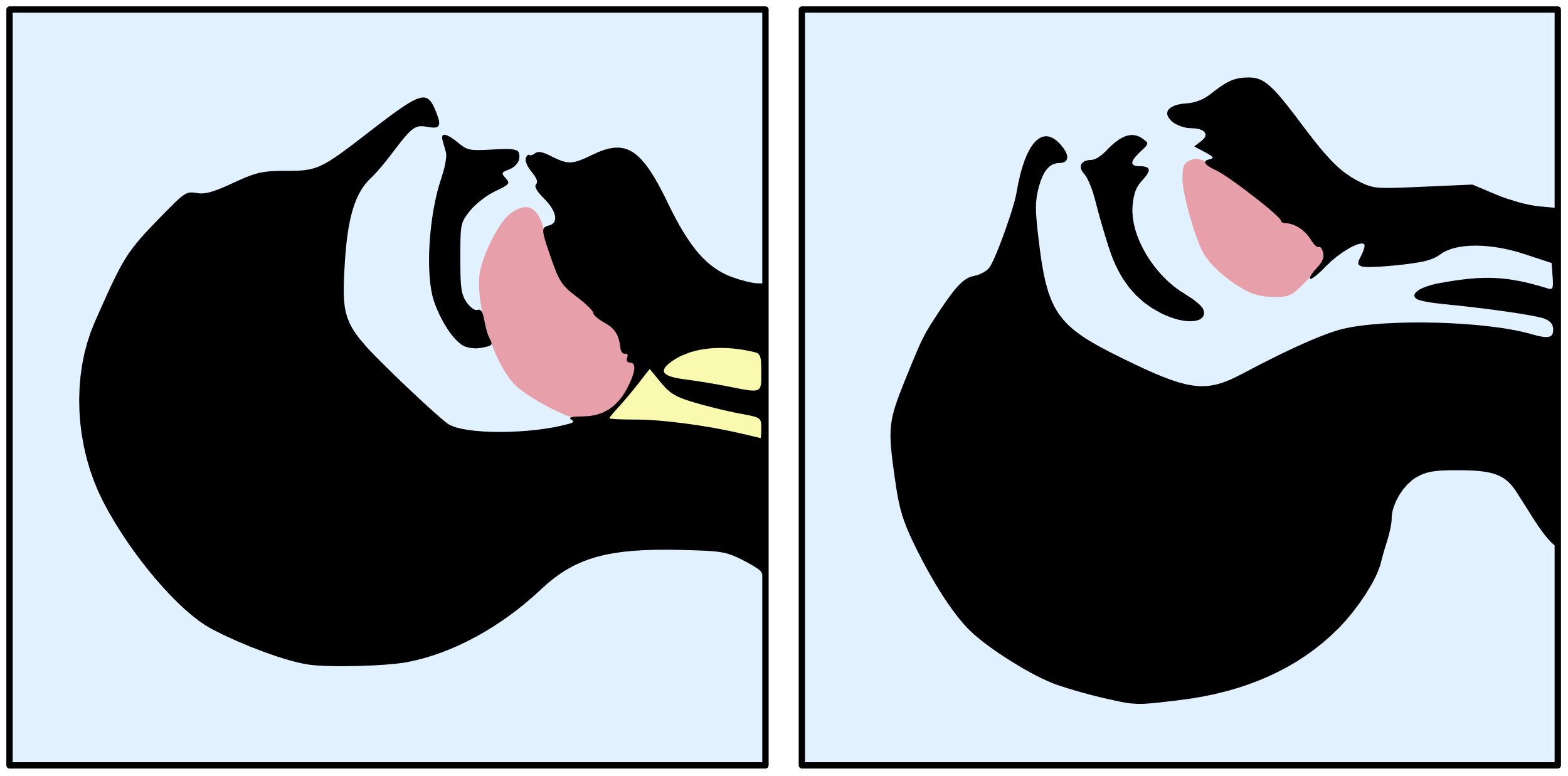
- Head tilt/chin lift is used in non trauma patients (patients with no suspected c spine injury) because this maneuver manipulate the c spine into injuring the spinal cord so jaw thrust is done instead
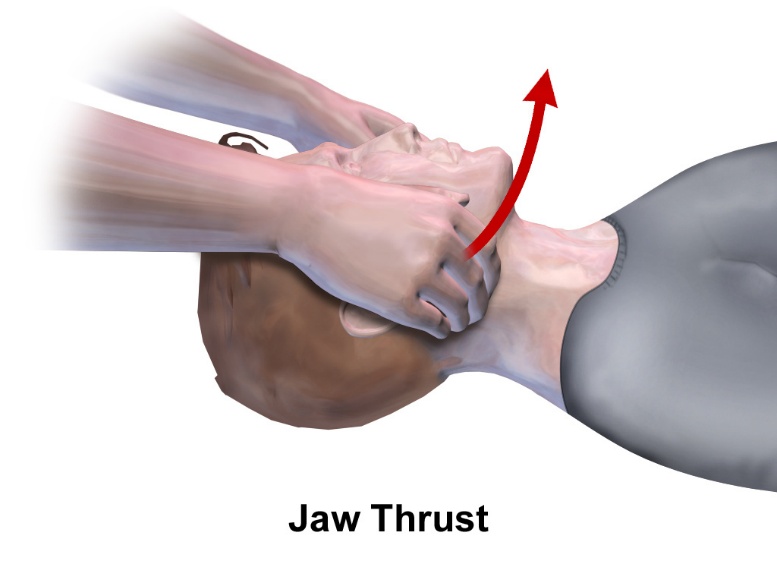
- To perform jaw thrust in trauma patients, two emergency providers have to be involved, one to perform the jaw thrust , the other one is to stabilize the head and neck area
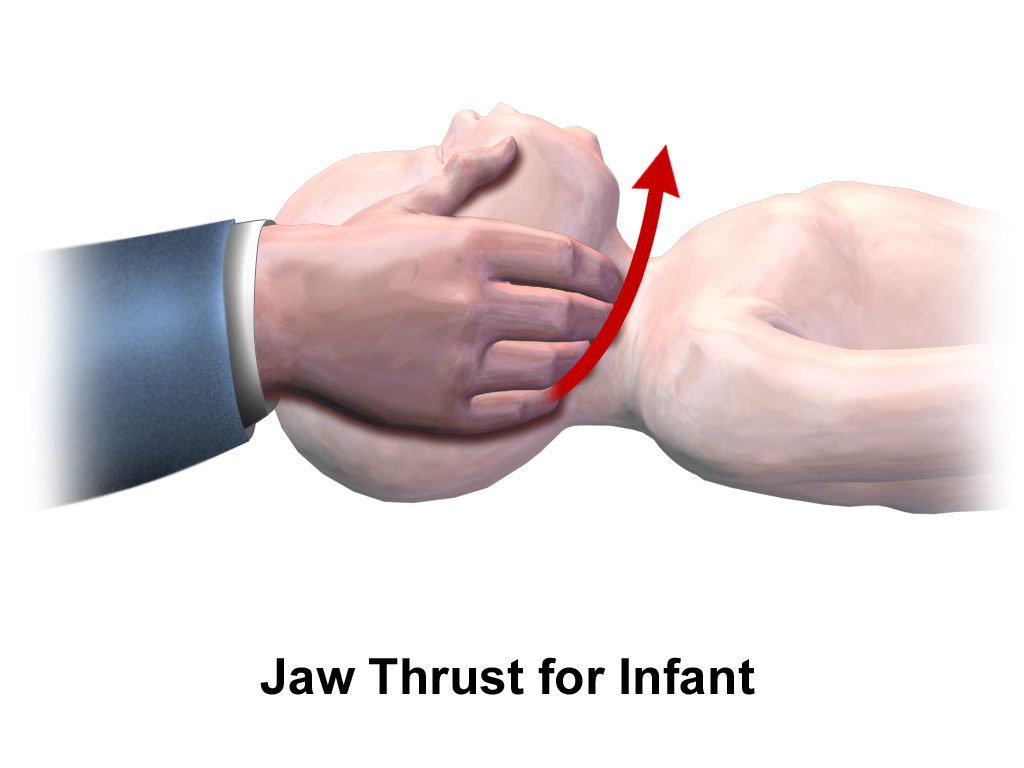
- Jaw thrust is done by both hands on the face, palms are on the zygomatic bone and fingers lift the jaw, thumbs open the mouth
Spine motion restriction
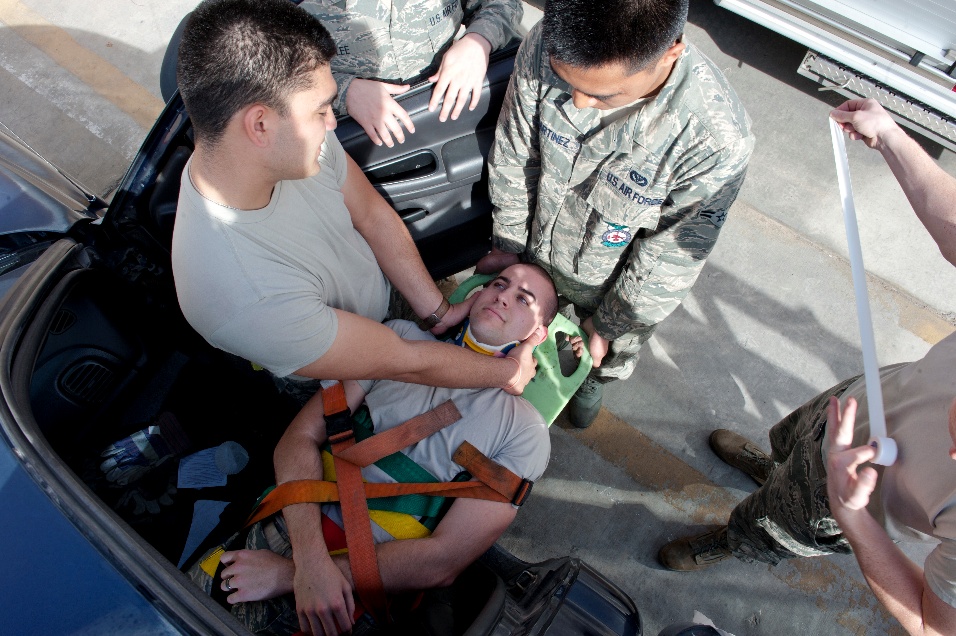
- Spine motion restriction is the maneuver done to stabilize the head and neck area in case of a suspected c spine injury
- Spine motion restriction can be done by applying a rigid cervical collar (it is not enough) and furtherly stabilizing the spine using sandbags and several straps on a stretcher
- Spine motion restriction can be done manually by an emergency provider by applying hands to the both sides of the head into the neck to stabilize the c spine of the patient
- if the patient on cervical collar need airway management, then the collar is removed and head is stabilized manually and airway management is done and then the collar put back again
Airway adjuncts
- Oropharyngeal airway (OPA)
- Nasopharyngeal airway (NPA)
OPA
- OPA is put to bypass the tongue (thus preventing tongue prolapse)
- It will provide airway patency but not protection so it is a temporary measure
- Indication of OPA is coma , when patient doesn’t have gag reflex
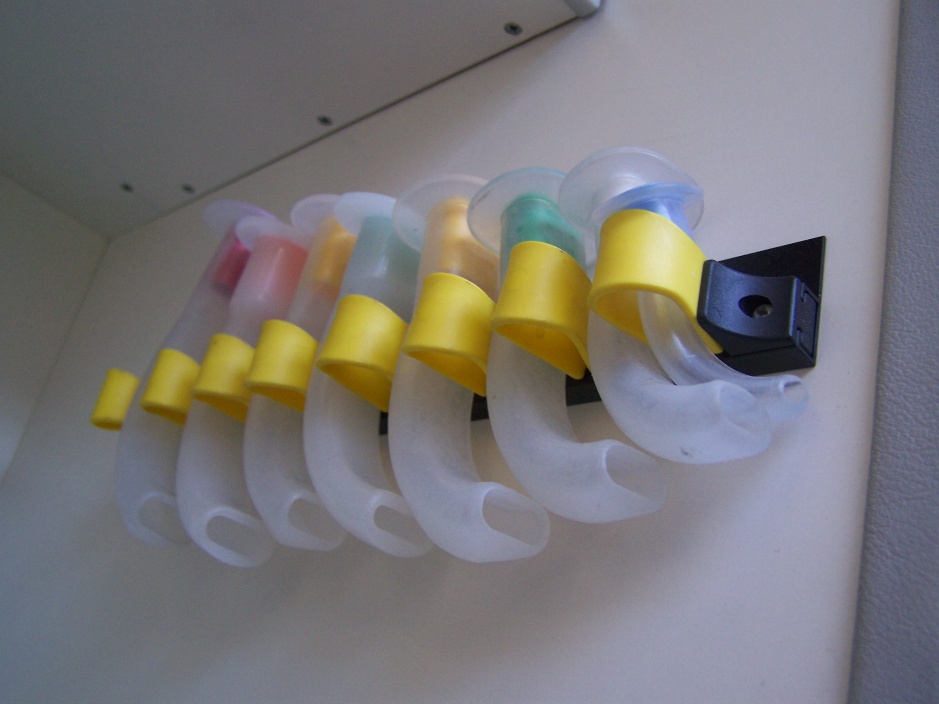
- OPA comes in different sizes and it has to be measured from the first incisors to the angle of the jaw
- if OPA size is less or more than ideal size for the patient, it might lead to airway obstruction instead of opening,
- Too small might push the tongue into closing the airway
- Too big might go into the esophagus and block the airway
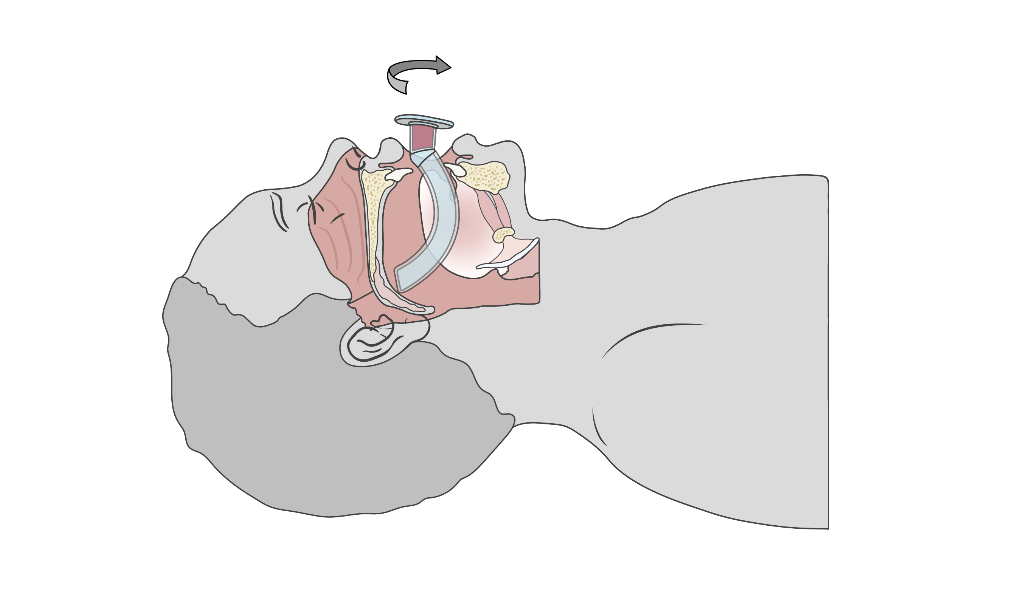
- Placement is by entering it upside down until it touch the hard palate then it is flipped and entered (to bypass the dome of the tongue)
- It can also be inserted by depressing the tongue by a tongue depressor and inserting the piece
NPA
- if patient does have gag reflex then OPA is contraindicated and NPA can be used instead because anything introduced nasally is less gag stimulating
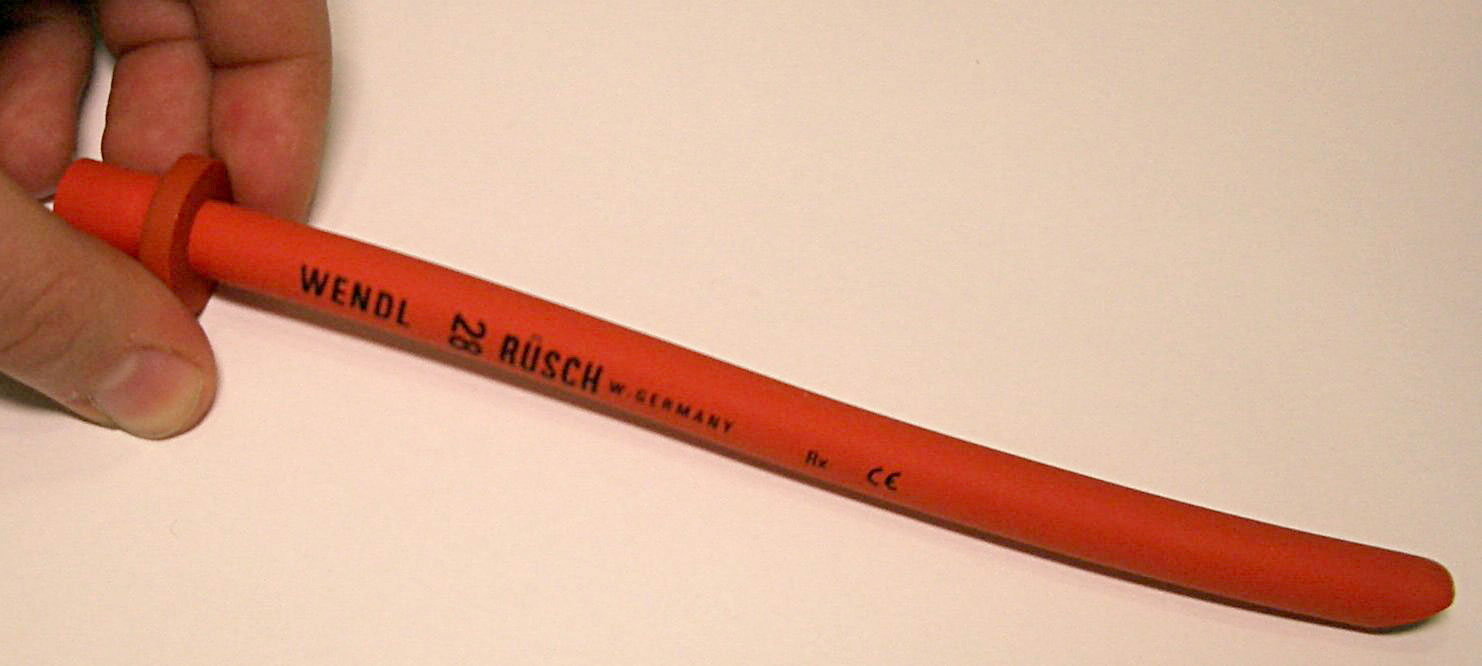
- NPA is longer than OPA for the same patient
Contraindications to NPA:
- Basal skull fractures: patient present with symptoms such as otorrhea, raccoon eyes and battle sign. Cribriform plate could be fractured in these patients and NPA can enter the brain through the cribriform and cause brain injury
- Severe midface fracture and those are commonly associated with basal skull fractures

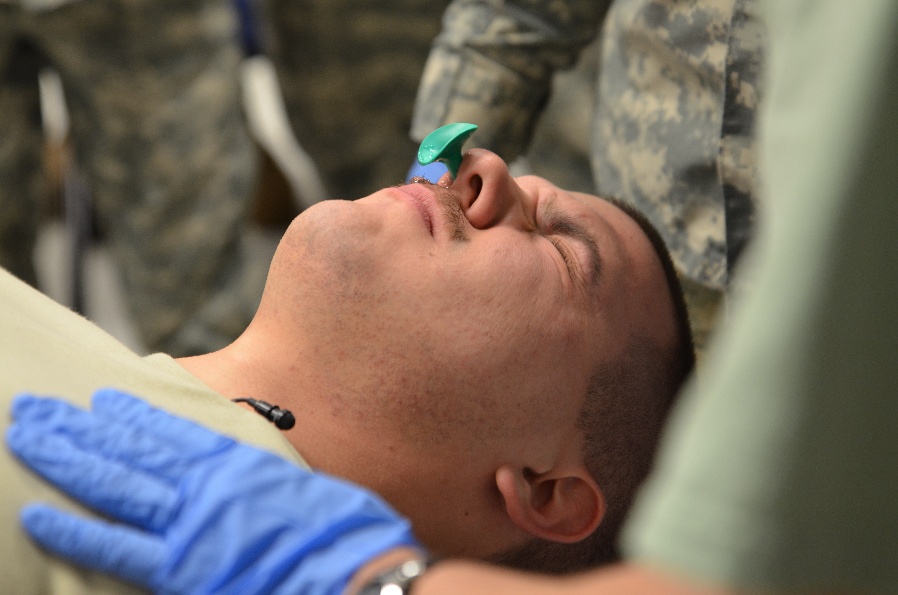
- NPA is measured from Infront of the nose and should reach the angle of the jaw or tragus of the ear
- NPA is used with water soluble lubricant to prevent injury and then introduced into the nose
- Device is inserted until the flared end rest against the nostril
Basic airway management
- Always remember that airway maneuvers and adjuncts are just a bridge to the creation of a definitive airway
- If both adjuncts are contraindicated then continue to do maneuvers until definitive airway can be done
- In pediatrics maneuvers and adjuncts have to be done together to keep airway open because tongue size is big
Continue learning
Practice the topics covered in this lecture.