
Pharmacology
Unfractionated Heparin vs Warfarin: A Full Comparison
Source presentation · 5 min read
Edits save on this browser. Download a copy for your records.
Video content
In this video, I will compare the heparin against the warfarin, the topics of the comparison will include:
- Source and chemistry
- Pharmacokinetics
- Mechanism of action
- Pharmacological effects
- Therapeutic uses
- Monitoring of effects
- Adverse effects
Source and Chemistry
| Heparin | Warfarin |
|---|---|
| Natural sulfated polysaccharide present in mast cells Carries negative charge Commercial preparations are derived from bovine lung or porcine intestinal extracts and there is synthetic ones | - Synthetic coumarin compound |
Pharmacokinetics
| Heparin | Warfarin | |
|---|---|---|
| Absorption | It can’t be absorbed by the GIT because it gets precipitated by the gastric HCL | It can be absorbed and it is well absorbed with 100% bioavailability |
| Available formulas | IV and SC | Oral only |
| Distribution | Cannot pass cross BBB or placenta | Can cross both BBB and placenta |
Mechanism of action
Before we explain the mechanism of action for these medications, first we have to understand some vital points about the coagulation cascade:
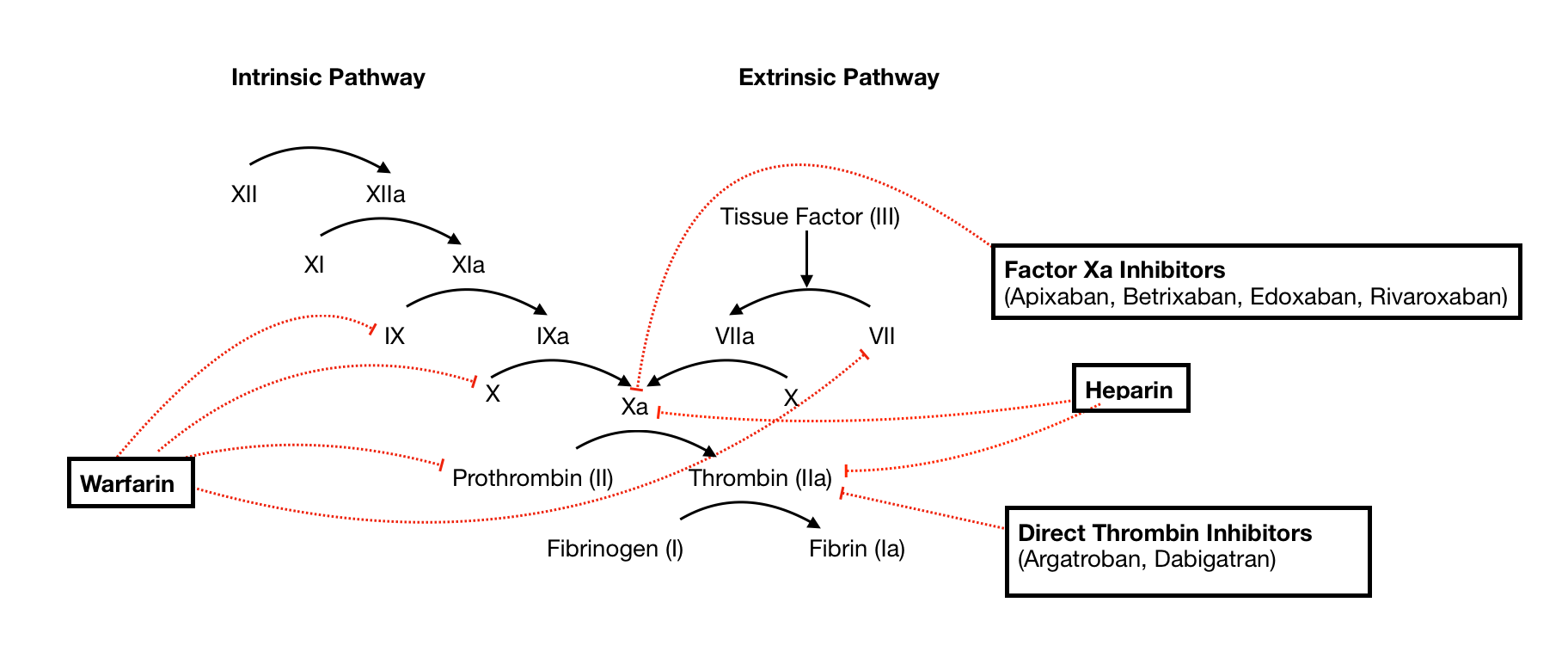
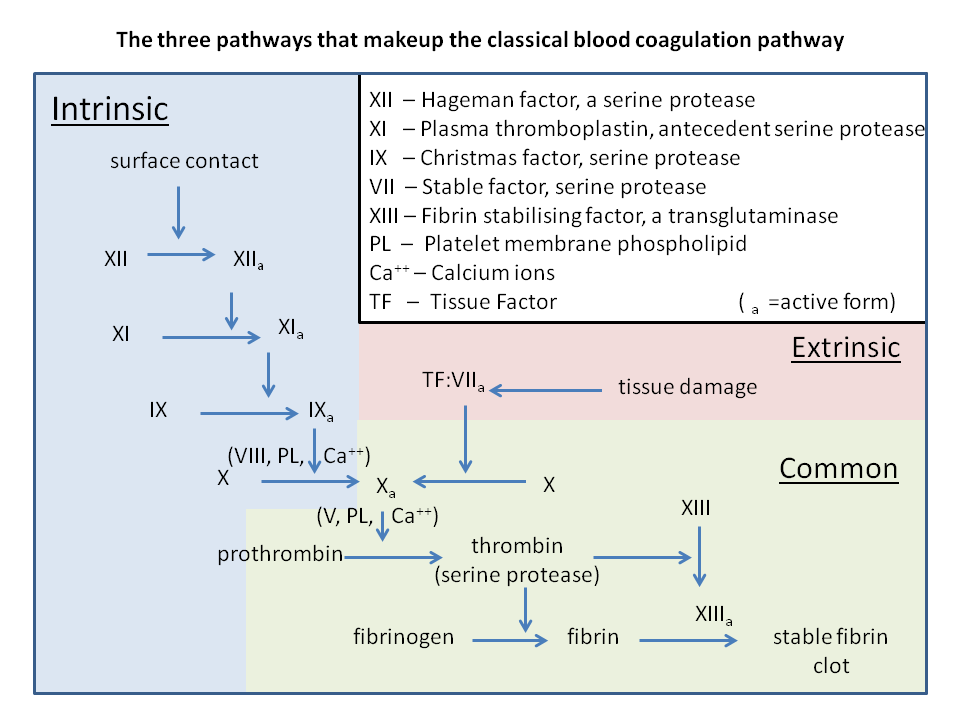
- Unfractionated heparin works by activating the antithrombin III (natural clotting inhibitor available in plasma)
- Antithrombin III work to inhibit several clotting factors especially factor X and factor II
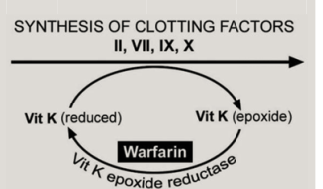
- Warfarin inhibits vitamin K epoxide reductase enzyme in the liver leading to inhibition of the formation of the active form of vitamin K
- This will lead to inhibition of the synthesis of vitamin K dependent clotting factors (X, IX, VII, and II)
- The action of warfarin can be antagonized by vit K
Onset and duration of clinical effects
| Heparin | Warfarin |
|---|---|
| Rapid onset of action if given IV, and onset in 1-2 hours if given SC It has short duration (2-4 hours) | Delayed onset of action 24-72 hours after administration, this is the time needed for depletion of vit k and vit k dependent clotting factors Long duration of action (2- 5 days), until the liver produce the depleted vit K and coagulation factors |
Pharmacological effects
| Heparin | Warfarin |
|---|---|
| Anticoagulation in vivo and in vitro Stimulates lipoprotein lipase which lead to decrease serum triglycerides | Anticoagulation in vivo only |
Therapeutic uses
| Heparin | Warfarin |
|---|---|
| Heparin is indicated for prevention and treatment of thrombotic events (to prevent thrombus propagation in established thrombosis) such as DVT, PE, AF, ACS; it can also be used to prevent coagulation during cardiac surgery, PCI, extracorporeal circulation and dialysis Dosing is variable but it is common to start with a bolus dose of 80 units/Kg IV then maintained by 18 units/kg/h; Dosing in ACS and stroke is much lower because there is higher risk of bleeding | Warfarin is indicated for prophylaxis and treatment (treatment means prevent thrombus propagation in established thrombosis) of DVT, PE, AF or cardiac valve replacement Warfarin is also indicated in reduction in risk of death in recurrent MI, and thromboembolic events (e.g. stroke, systemic embolization) after MI Given orally 2- 10 mg/day |
Monitoring of therapy
| Heparin | Warfarin |
|---|---|
| By activated partial thromboplastin time (APTT) APTT checked at baseline and then every 6 hours until 2 or more therapeutic values are obtained then it is checked every 24 hours Dose titration is according to the APTT Monitoring for adverse effects includes Hb, hematocrit (bleeding), PLT and vital signs | By prothrombin time (PT) or international normalized ratio (INR) INR is preferred over PT INR value in patient without anticoagulation is 1 INR is monitored serially until the required therapeutic value is reached |
Adverse effects
| Heparin | Warfarin |
|---|---|
| Bleeding: very dangerous, e.g. intracranial hemorrhage, GI bleeding, intraocular bleeding, hemarthrosis… bleeding could be treated with: Immediate stopping of the medication Fresh frozen plasma: to replace the clotting factors Protamine sulfate: protamine carries a positive charge that bind to the heparin which have a negative charge to form a stable complex; 1 mg of protamine can bind to 100 U of heparin | Bleeding: very dangerous, e.g. intracranial hemorrhage, GI bleeding, intraocular bleeding, hemarthrosis… bleeding could be treated with: Immediate stopping of the medication Fresh frozen plasma: to replace the clotting factors Vitamin K: 10 mg slowly IV or IM to enhance synthesis of clotting factors |
| Heparin | Warfarin |
|---|---|
| Heparin can’t be given IM but if it is given , it will lead to hematoma formation Thrombocytopenia: there are 2 types of thrombocytopenia associated with heparin use, the first type is non immunogenic interaction with PLT that occur within the first 48-72 hours of initiation of heparin therapy, this is temporary drop in PLT and will recover once heparin is stopped; the second type is much more serious known as heparin induced thrombocytopenia and this is immune mediated reactions against PLT occur 5 days after heparin initiation and it can lead to thrombosis e.g. PE, DVT, stroke , MI… (HITT) | Warfarin may also lead to GI side effects like nausea, vomiting, abdominal pain Hemorrhagic skin necrosis: when starting warfarin, biosynthesis of protein C is reduced leading to temporary procoagulant state. This can lead to hemorrhagic infarction of skin, breast, intestine and fatty tissue. Normally avoided by concurrent heparin administration Purple toe syndrome: characterized by cholesterol microembolization that causes purple lesions to develop on the toes and sides of feet |
| Heparin | Warfarin |
|---|---|
| Other heparin adverse effects include hyperkalemia, alopecia and osteoporosis (with long term use) | Teratogenicity: abnormal bone formation in early pregnancy (fetal warfarin syndrome) CNS hemorrhage in the fetus if given in late pregnancy Sudden withdrawal may lead to thrombotic catastrophes |
Anticoagulants contraindications
- PLT count < 100 000
- Active, uncontrollable bleeding except for DIC
- Patient has a history of heparin induced thrombocytopenia can’t be given heparin
- Routine monitoring tests can’t be performed for any reason
- Threatened abortion, eclampsia or preeclampsia
Continue learning
Practice the topics covered in this lecture.